
Most advice about younger audiences starts with price. For museums, that advice has already been tested — and it mostly didn't work.
Research on free admission has found that removing the entrance fee doesn't bring in new audiences to anything like the degree institutions expect. Studies of visitor motivation consistently find that museum-goers care less about cost than the general population does, and that admission price ranks below lack of time and lack of interest as a barrier. When researchers looked at what actually constrains non-visitors, the most common answer wasn't disinterest at all. It was that they didn't know what was there.
Which means museums are in an unusual position: you have already removed the barrier every other art form is still arguing about, and the audience still didn't arrive. The problem is somewhere else.
The permanent collection is the permanent problem
Here's the structural issue, and it's the exact inverse of a theater's.
A theater's difficulty is that the show closes — whatever recognition it builds evaporates in six weeks. A museum's difficulty is that nothing ever closes. The Rothkos will be there in March. They'll be there next year. There is no night on which you must go, which means there is no night on which you do.
Permanence reads as reassurance to a board and as permission to procrastinate to a 26-year-old. And it compounds with the free-admission problem: a thing that costs nothing and is always available carries no urgency at all. Scarcity and price are the two levers most industries use to prompt a decision, and museums have voluntarily given up both.
Which is why exhibitions, late openings and one-night programming outperform the collection in every attendance dataset — not because the work is better, but because they end.
The strategic consequence isn't to start charging. It's to recognize that your marketing has to manufacture the occasion that your pricing and permanence have removed.
What does Gen Z actually want from a museum?
Somewhere to be, more than something to see.
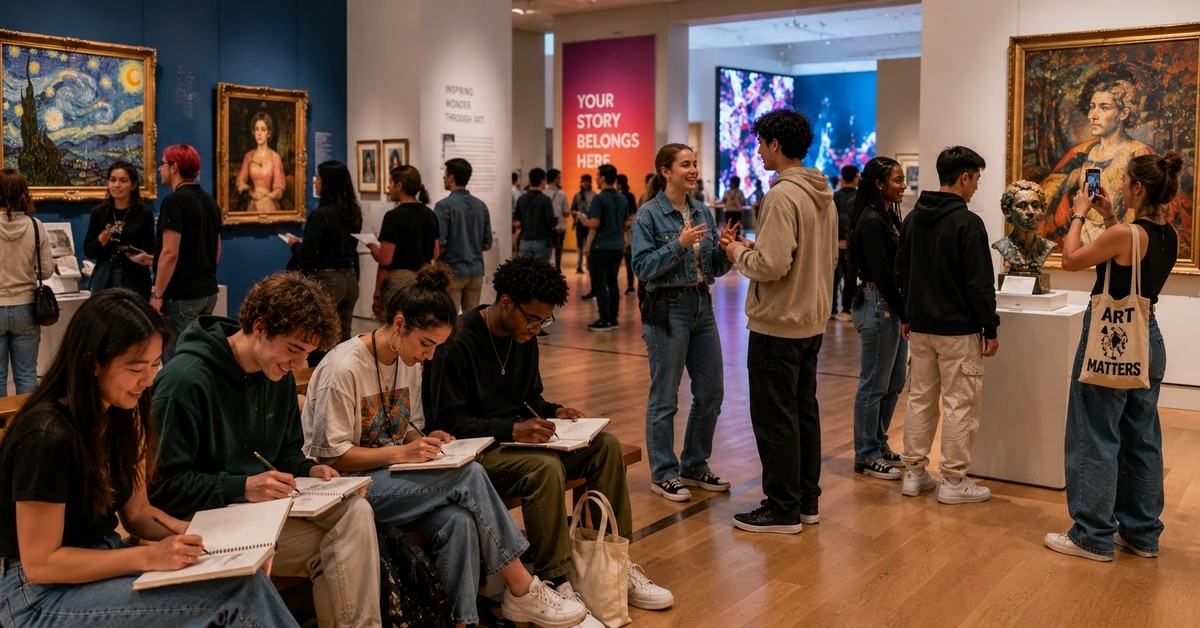
The American Alliance of Museums published a piece in 2025 written with members of the Youth250 Bureau, asking that question directly. The answers were less about collections than about the building. They asked for a "safe and accessible place to be social and loiter" — explicitly without a purchase requirement. Somewhere to gather, connect, and be off a screen for a while.
The rest of what they named follows from that: after-hours events with a casual, open-ended atmosphere; evening programming that works around jobs; hands-on formats rather than glass cases; music and food used as the things that make a room social. And, notably, a say in it — youth advisory boards, younger staff with actual authority, Gen Z represented where programming decisions get made.
That last one is easy to dismiss as governance-speak and shouldn't be. An institution that programmes for a demographic without anyone from it in the room reliably produces the thing that demographic finds slightly embarrassing.
Museums have the third-place advantage and mostly waste it
No other cultural organization can offer what a museum can, and the sector rarely markets it.
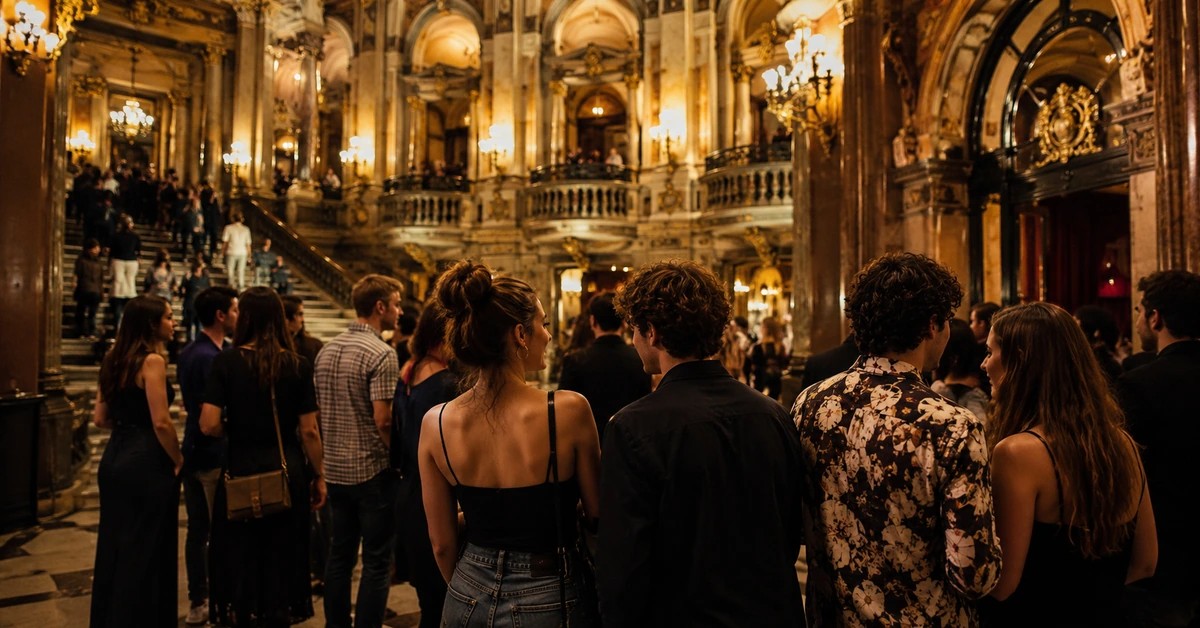
You can arrive alone without it being strange. You can stay forty minutes or three hours. You can leave whenever you want, talk the whole time, and nobody will shush you. There's no start time to be late for, no seat to be in, no interval, and no clapping to get wrong.
For an audience whose two biggest social frictions are "I have no one to go with" and "I don't know how to behave there," that combination is close to a perfect product — and almost none of it appears in museum marketing, which still tends to lead with the exhibition title and the curator's framing.
Set that against what Harris Poll found about this generation's weekends: a shift toward quieter, lower-pressure, more intentional settings and away from traditional nightlife. Museums are, structurally, exactly that. The offer is already right. The description is the problem.
So what actually stops them coming?
Time, relevance and awareness — in that order, and none of them are fixed by discounting.
Time is the one museums can address fastest, and it's mostly a scheduling decision rather than a marketing one. Institutions open 10 to 5 on weekdays are open precisely when their target audience is at work. Late openings aren't an experiment; for a working 28-year-old they're the only door.
Relevance is harder and more interesting. People don't visit because they can't see what the place has to do with them — which is a question your exhibition copy could answer and usually doesn't, because it's written to describe the objects rather than to connect them to anyone's life.
Awareness is the largest and the most embarrassing, because it's entirely solvable. Non-visitors overwhelmingly don't know what's on. Not "considered it and declined" — didn't know. A civic institution can be physically enormous, free to enter, and functionally invisible to someone who lives four blocks away.
Manufacture the occasion
If permanence removed the deadline, the job is to put one back. Practical versions:
Late openings with a fixed date. The date is the product. "Open Thursday until 9" is an event; "open Thursdays" is a fact.
Programme the room, not just the walls. Music, food, a talk, a maker session — the things AAM's respondents named as what makes a space social.
Give the permanent collection a reason. A one-night themed tour of works you already own costs nothing to stage and creates the urgency the collection can't generate on its own.
Say what there is to do, not only what there is to see. A first-timer is trying to picture two hours of their life, and a list of artists doesn't help them do it.
Make bringing someone the default. The companion barrier is real here too, and it's cheaper to solve than anywhere else — you're not selling two tickets, you're selling an afternoon.
Does digital fix this?
Partly, and far less than the vendors selling it suggest. Most writing on museums and younger audiences arrives at the same answer — apps, AR, VR, geolocation, gamified trails — and it is worth being clear about what that solves and what it doesn't.
What it genuinely helps with is the in-visit experience: audio guides that don't require a handset, layered interpretation for people who want more than a wall label, hands-on formats that AAM's respondents specifically asked for. Those are real improvements and some institutions have done them well.
What it does not touch is the constraint the research actually identifies. If the dominant reason non-visitors don't come is that they don't know what's there, an augmented-reality exhibit is an improvement for people already standing in your building. It is invisible to everyone else.
There's a sequencing error underneath a lot of museum digital strategy: heavy investment in the visit, light investment in the awareness that produces one. A museum with a mediocre website, no presence where people plan their weekends, and a beautifully executed AR installation has optimized the last ten minutes of a journey most people never start.
Fix the door before the room.
The advantage that no vendor sells you
Worth stating plainly because it gets lost in the technology conversation: the most valuable thing a museum has for this audience is the floor itself. Space, time, no obligation, and permission to just be there.
That is an increasingly rare commodity. Nearly every other place a 26-year-old can spend three hours expects them to buy something at intervals. A museum doesn't. In a period where research shows this generation moving toward quieter, lower-pressure, less expensive ways to spend time, an institution offering exactly that — and mostly forgetting to mention it — is leaving its best argument unspoken.
What museums should stop doing
Leading with the curatorial frame. "An interrogation of materiality in the post-industrial landscape" is accurate and it is not an invitation. The same research strand that produced the "post the menu" finding — Wallace's analysis of $41 million in audience-building work, where the most consistently effective practice was making communications welcoming, informative and responsive — flagged exactly this kind of insider shorthand as the thing that reads as a closed door.
Treating free as the marketing. It isn't a message; it's the absence of one. And the evidence says it isn't doing the work you think.
Assuming the building speaks for itself. It speaks eloquently to people who already come.
What should a museum measure?
Not visitor numbers — a free institution's headline attendance can rise on tourists and school groups while local under-35 engagement flatlines.
Age mix of first-time visitors, separately from total admissions
Repeat visit rate within twelve months — the number that says whether you built a habit or hosted a crowd
Late-opening and event attendance versus standard hours, which tells you what the occasion is worth
How people found out, since awareness is the dominant constraint and you should know which channel is fixing it
Fuller instrumentation is in what audience data arts organizations should track.
How CultureOwl fits in
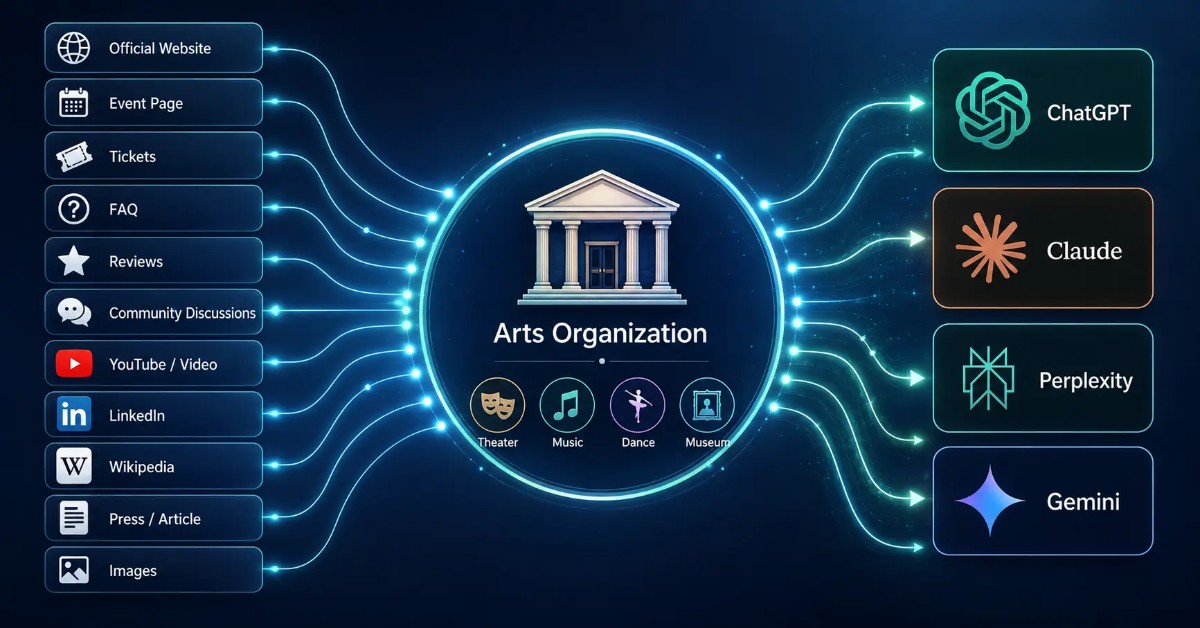
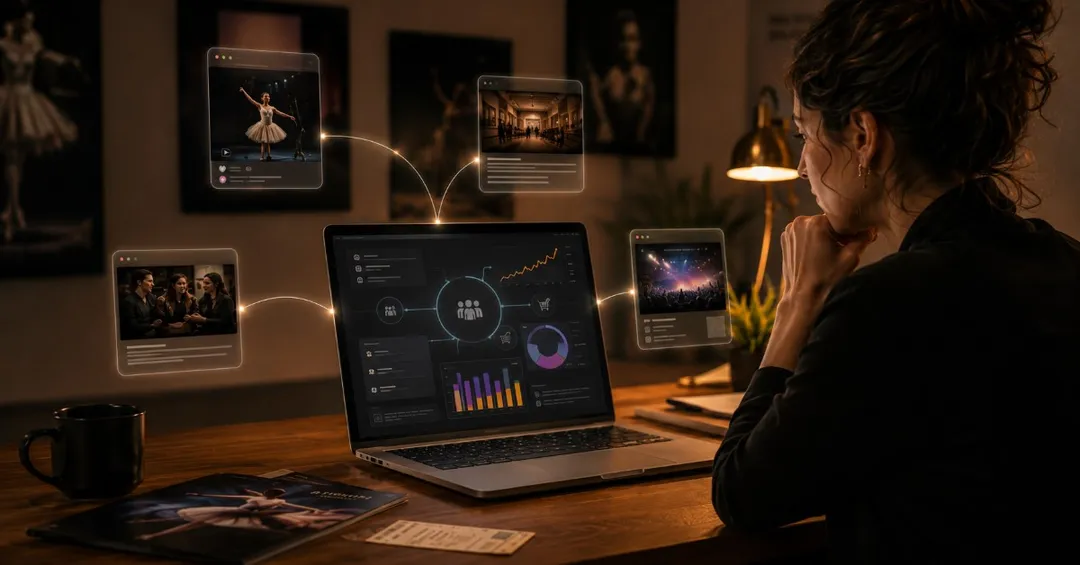
If the biggest constraint on museum visiting is that people don't know what's on, then the core problem is distribution rather than persuasion — and it's the one your own channels can't solve, because they reach people who already found you.
Discovery across a whole market, where people browse for something to do on a given weekend rather than searching for a museum by name.
Listings that answer "what would I actually do there" — hours, what's on now, how long people spend, what the rooms are like — instead of a curatorial abstract.
Occasion-shaped visibility for late openings and one-night programming, which is where the urgency your permanent collection lacks has to come from.
A following you own, so a first visit becomes someone you can tell about the next late opening rather than a number in a turnstile.
Editorial that shows the rooms, because a photograph of people talking in your galleries sells the third-place offer better than any object description.
CultureOwl is a Public Benefit Corporation with that mission written into its charter rather than its marketing — built to work within nonprofit budgets rather than extract from them. More on our event promotion and audience growth pages.
The bottom line
Museums removed the price barrier and the younger audience still didn't arrive, which should have settled the question of what the barrier actually was. It's time, relevance and — above all — knowing what's there at all.
The building already offers what this generation says it wants: somewhere to be, alone or with someone, with no rules to get wrong and no clock to beat. What it lacks is a reason to go this weekend, and that has to be manufactured, because permanence will never supply it.
For the cross-discipline version, see how arts organizations can reach younger audiences, and for the wider strategy, audience development strategies for arts organizations.