
A theater's problem with younger audiences is that nobody has heard of the play.
An orchestra has the opposite problem, and it's stranger: everybody has heard the music, and almost nobody knows they have.
A 2022 Royal Philharmonic Orchestra study found 65% of people under 35 regularly listen to orchestral music. Not "would be open to." Regularly. They encounter it in films, in games, in advertising, in streaming playlists built for studying and sleeping — and almost none of that listening connects, in their head, to a concert hall two miles away.
That gap is the entire opportunity. You are not building an appetite that doesn't exist. You are supplying a name for something people already love and cannot currently ask for.
How do people under 35 actually encounter orchestral music?
Through screens, overwhelmingly — and games have become the most underrated door of all.
Survey work on gamers found 52% would attend a live orchestral performance of music from their favourite games. Among under-25s, 22% say orchestral soundtracks are part of why they play, and 21% credit games with introducing them to orchestral music in the first place.
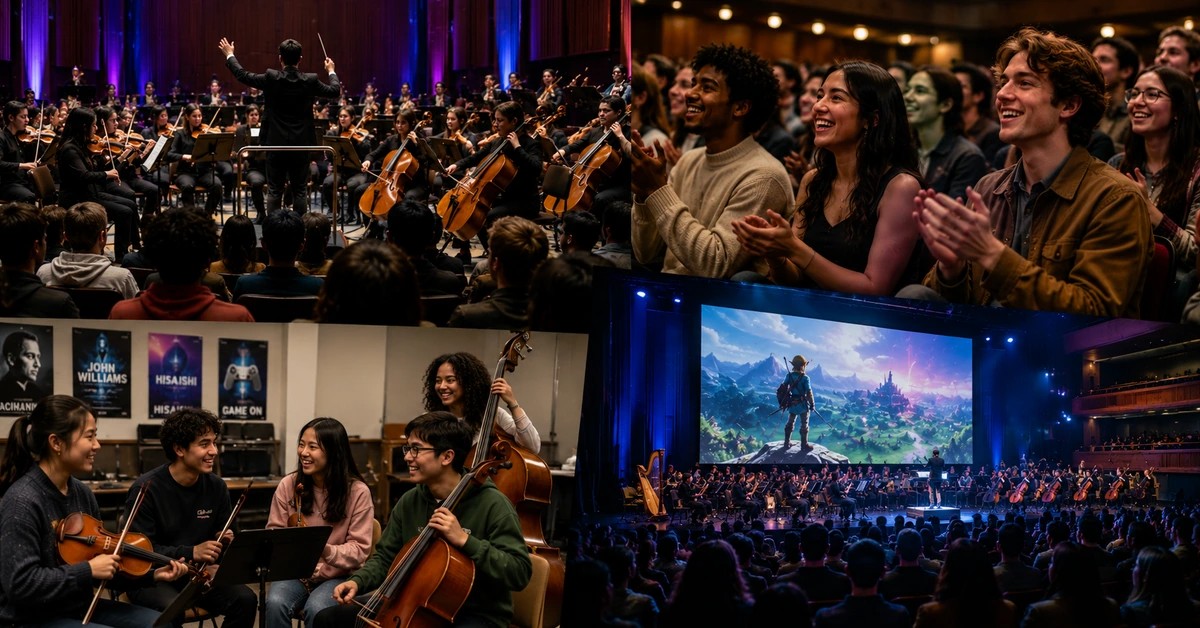
This is not theoretical. A Final Fantasy VII Rebirth concert sold out the Royal Albert Hall in September 2024. The Barbican filled three nights with a Sonic the Hedgehog tour. These are not novelty bookings; they're demonstrations that the audience was already there, waiting to be told the thing they liked was available live.
Set that against the sector's baseline — symphony attendance had been declining roughly 2.8% a year over a decade — and the contrast is instructive. The decline was never a decline in appetite for orchestral sound. It was a decline in the number of people who understood that the concert hall was where you go to hear it.
The recognition problem is inverted, so the marketing should be too
Most orchestral marketing leads with the composer, the conductor, the soloist and the opus number. For a subscriber, that is exactly the right information — it's what they're buying.
For someone in the 65%, it is a series of proper nouns attached to nothing. They don't know the piece by name. They know it by sound, and you have given them no way to make the connection.
The practical inversion:
Name where they've heard it. Not just "Symphony No. 9" — the movement that plays in the film they've seen, the passage used in the advert, the theme a game borrowed. This is not dumbing down; it's supplying the index entry that lets someone locate a memory.
Lead with sound, not credentials. Thirty seconds of the actual music on the event page will out-convert any description of the conductor's career. Someone who hears it and recognizes it has just answered every question your copy was trying to.
Treat the soundtrack concert as a front door, not a compromise. The programming question below matters, but the sequencing question matters more: what happens after they come.
Does programming game and film music actually build an audience?
It reliably fills a hall. Whether it builds anything depends entirely on what you do next — and the sector's record there is poor.
This deserves a straight answer, because the crossover question has become an argument in which both sides are half-right. A National Endowment for the Arts examination of crossover strategies found organizations repeatedly concluding the approach did not deliver the migration they'd expected: audiences came for the crossover event and had no interest in the main season.
Our read is that this is usually a design failure rather than a proof that crossover doesn't work. The soundtrack concert is treated as a standalone product — different marketing, different audience, no follow-up, no bridge. Someone attends a Zelda night, has a wonderful time, and the next thing they receive is a season brochure organized by composer.
What a bridge looks like in practice:
Programme one recognizable orchestral work into the soundtrack concert itself, and say why it's there. The audience is already in the room and already listening.
Follow up within weeks with one specific recommendation, chosen for sonic resemblance rather than programming logic. "You liked the Uematsu — this is where he got it from" beats a brochure.
Make the second purchase small. A two- or three-concert package, not a season.
Track the crossover audience separately, so you can find out whether any of them returned rather than assuming.
Without those, a soundtrack concert is a successful event and a failed strategy — and the sector has plenty of both.
Are younger audiences actually showing up to classical concerts?
The evidence says yes, and more intensely than older audiences. A global study of more than 8,000 adults across ten countries found 15% of interested Gen Z and Millennial respondents identify as dedicated classical followers — roughly double Gen X at 8% and triple Boomers at 5%. More than eight in ten young people who have ever attended a classical concert did so within the past year.
That study came from Fever's Candlelight series, which produces and sells the concerts it describes — read the enthusiasm with that in mind. But the direction is corroborated by independent data: the Royal Philharmonic listening figures above, and audience composition at major orchestras, where the LA Philharmonic reported Gen Z, Millennial and Gen X audiences making up 63% of a recent season.
The same global study found 61% of younger attenders discovering classical events through social media, ahead of word of mouth at 47% and streaming at 38%. Older generations rank word of mouth first. That is a distribution difference, not a taste difference — and it is fixable without touching a note of programming.
The programmes everyone cites, and the number nobody checks
The sector has a standard list of younger-audience initiatives, and they get repeated in every article on this subject: San Francisco Symphony's SoundBox, late-night and casual with no assigned seating. Chicago Symphony's MusicNOW, curated with post-concert mingling. LA Phil's CODA, a membership for 20-to-30-year-olds with after-parties. Seattle Symphony's Untuxed, Untitled and Sonic Evolution strands.
They are genuinely good programmes and they demonstrably work at what they're built for. Seattle Symphony's collaboration with Sir Mix-a-Lot produced a video with more than 3.2 million YouTube views — reach no season brochure has ever achieved.
Now look at the number that rarely appears alongside them. CODA reported around 2,000 members and roughly 100 to 200 attendees per concert.
Read that as a ratio and it's the whole problem in one statistic. Between five and ten percent of the membership shows up to any given event. The programme succeeded at signing people up and largely failed at getting them into a hall — which is a very different outcome from the one usually reported, and it's the outcome most of these initiatives quietly share.
Meanwhile the underlying figures at the same institutions stay stubborn. Chicago Symphony's audience has been reported at an average age of 49, with 20% aged 31 to 45 and only 3% under 30. Years of well-designed, well-funded younger-audience programming, and the core audience barely moved.
Our read: these programmes are almost always measured on sign-ups and impressions, and almost never on conversion. A 3.2 million-view video is a marketing result. Two thousand members is a database result. Neither is an attendance result, and the sector has spent a decade reporting the first two as though they were the third.
That isn't an argument against SoundBox or CODA. It's an argument that the programme is the easy half. The hard half — the specific follow-up that converts a member into an attender, and an attender into a returner — is where almost none of the investment goes, and it's why the 3% figure survives a decade of innovation.
Let them hear the orchestra play music they already know
Orchestras have an advantage here that no other art form has, and almost none of them use it.
A theater cannot let you sample its new production — it doesn't exist anywhere else. An orchestra is performing music that is already recorded, already streaming, already sitting in a playlist somewhere. The sampling problem is solved before you start.
Every concert listing should carry the sound. Thirty seconds of the main work, or a link to the recording, or a violinist playing the theme to a phone camera. For an audience that knows this music by ear and not by name, that single element does more work than the entire rest of the page.
The rights objection applies to commercial recordings, not to your own musicians playing sixteen bars in a rehearsal room. That version is free, it's yours, and it looks like a person rather than an advertisement.
The rest is friction, and it's free to remove
Younger audiences overestimate concert prices, often by around double, which means the first job is posting a real number rather than discounting against an imaginary one.
Alongside it, the questions a first-timer won't ask you:
How long is it, and is there an interval?
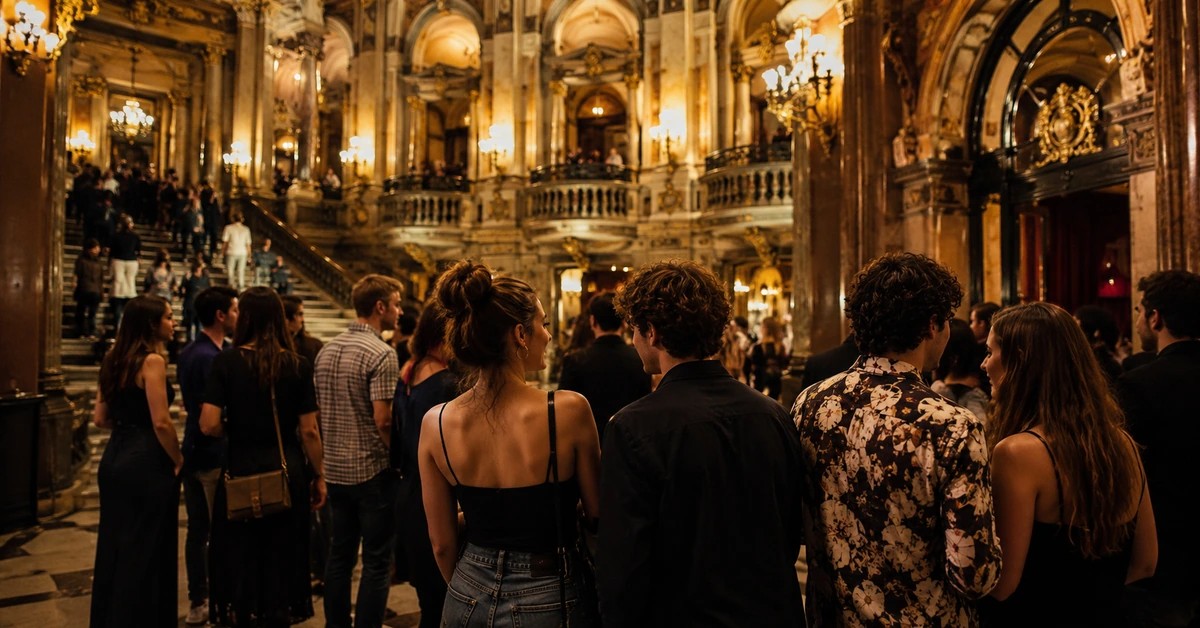
What do people wear? A photograph of the foyer with actual people in it settles this faster than any dress-code note.
When do I clap? The single most-cited anxiety about classical concerts, and one sentence resolves it.
Can I come alone, or do I need someone with me? Younger audiences rarely attend solo, so anything that makes bringing a friend the default — two-for-one framing rather than percentage discounts — addresses a barrier no price cut reaches.
Who is actually in the hall, and why it changes the plan
Orchestras serve at least three groups who want almost nothing in common, and most concert marketing is written for the smallest of them.
There's the core, who follow repertoire, conductors and soloists, and for whom the opus number is the product. There's the sound-first listener — the 65% — who knows the music through screens and streaming and has no vocabulary for what they like. And there's the occasion attender, choosing an evening rather than a programme, for whom the concert is the setting rather than the reason.
Written for the core, a season announcement reaches roughly the people who were already coming. The other two groups need different first sentences entirely — one needs "you've heard this," the other needs "here's what the night is like."
This is why an under-performing campaign often isn't a creative problem. It's one message aimed at three audiences, landing properly for one. The practical mechanics of splitting them are in audience segmentation for arts organizations.
A word on where the anxiety actually comes from
Ask an orchestra why younger people don't attend and the answers cluster around price, attention spans and the perceived stuffiness of classical music. Two of those three are largely wrong.
Attention span is contradicted by the evidence: the same audience sits through three-hour game soundtrack concerts and multi-hour festival sets. Price is real but distorted — the barrier is what people think a ticket costs, not what it costs.
The third one, though, is worth taking seriously rather than dismissing, because it isn't about the music. It's procedural anxiety: not knowing when to clap, what to wear, whether you'll be the youngest person in the row, whether someone will tut. None of that is snobbery on the audience's part — it's a reasonable response to an environment that has never explained its own conventions to anyone who didn't grow up in it.
Every one of those is answerable in a sentence, and almost no orchestra answers them anywhere a first-timer would look.
What should an orchestra measure?
Not tickets sold — a full hall for a soundtrack concert tells you nothing about whether an audience was built.
New-buyer share per concert, and whether crossover programming produced any
Crossover-to-mainstage conversion, tracked as its own number rather than assumed
First-time buyer return rate within twelve months
Age mix of new buyers, separate from total attendance
Fuller instrumentation is in what audience data arts organizations should track, and the follow-up mechanics are in arts audience retention.
How CultureOwl fits in
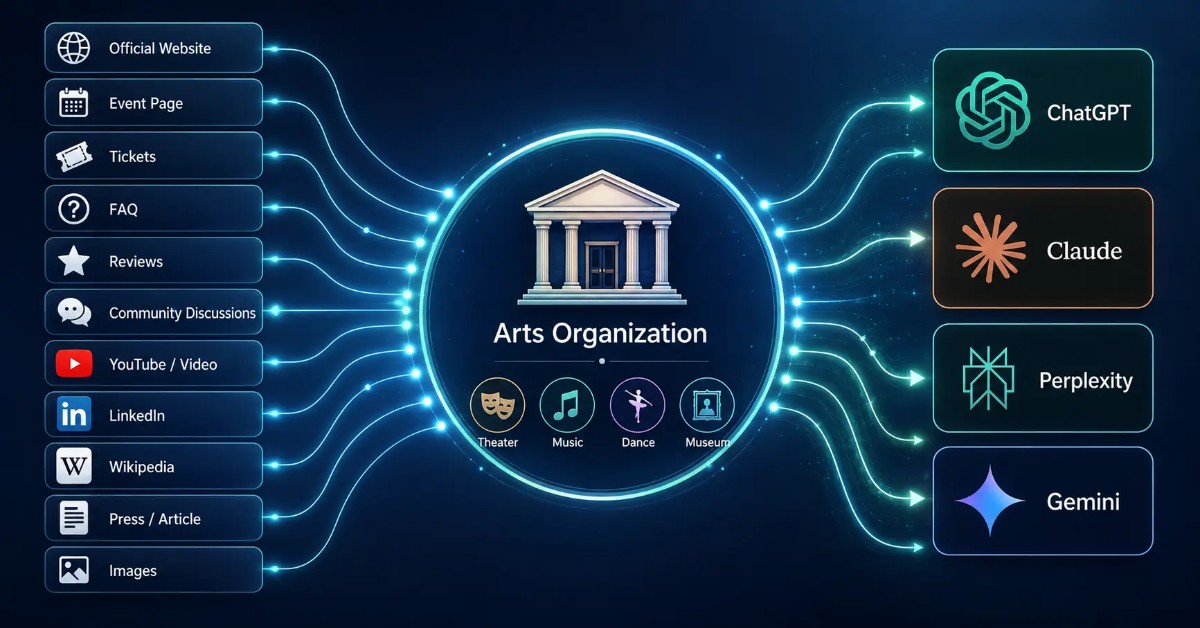
The 65% who already listen to orchestral music are not on your mailing list, don't follow you, and would never think to search for a symphony by name. They are, however, browsing for something to do — and that is a discovery problem your own channels structurally cannot solve, because they only reach people who already found you.
Discovery across your whole market, where people browse by interest and mood rather than by composer.
Listings with room for the sound — the single highest-value element for an audience that recognizes this music by ear.
Context that names where they've heard it, so a familiar piece stops being an opus number.
A following you own — people follow the orchestra directly, so the soundtrack-concert audience becomes reachable next season instead of disappearing.
Promotion and ticketing that share data, so crossover conversion is something you can actually measure.
CultureOwl is a Public Benefit Corporation with that mission in its charter rather than its marketing — built to work within nonprofit budgets rather than extract from them. More on our event promotion and audience growth pages.
The bottom line
Sixty-five percent of under-35s already listen to orchestral music. Half of gamers would come to hear a score performed live. The Royal Albert Hall sold out for a video game soundtrack. The appetite is not in question.
What's missing is the connection between the sound someone already loves and the hall down the road — and that is a marketing problem, not a programming one. Name where they've heard it. Put the music on the page. Build a bridge out of the crossover concert instead of treating it as a destination. Then measure whether anybody crossed.
For the cross-discipline version, see how arts organizations can reach younger audiences, and for the full marketing system, how to market your orchestra.