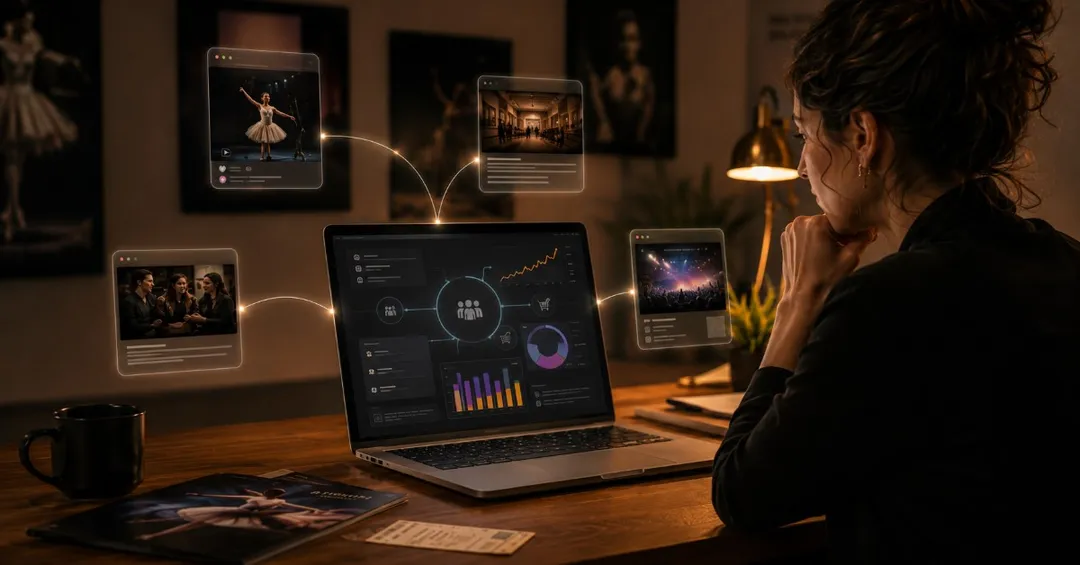

Most arts organizations are still expected to market themselves in isolation—each event promoted separately, each campaign rebuilt from scratch, each institution competing for attention in the same crowded digital space.
But cultural communities don’t thrive that way.
The arts are not a collection of disconnected transactions. They are an ecosystem. And ecosystems grow through shared visibility, not siloed outreach.
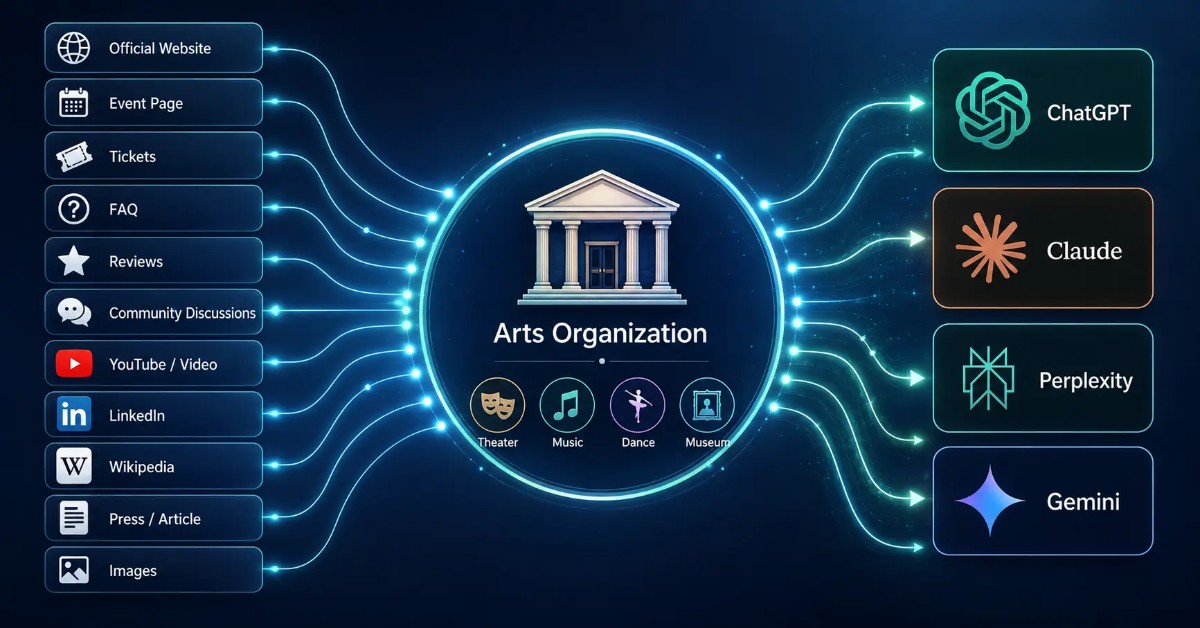
This is the value of aggregated cultural discovery: when organizations are surfaced together within a shared cultural context, visibility builds cumulatively rather than resetting with every new event.
Traditional event promotion treats each organization as a standalone advertiser. Success depends on constant output, constant spending, and tools that were never designed for nonprofit realities. The result is familiar: smaller organizations remain harder to find, emerging programming gets buried, and marketing becomes repetitive and inefficient.
CultureOwl operates on a different premise. Discovery should be collective infrastructure.
We aggregate real cultural programming in one place so audiences don’t have to search across fragmented platforms, newsletters, and social feeds to find what matters. The experience is intentionally seamless: a trusted place to explore what’s happening nearby, a wider view of a city’s cultural life, and an easier way to find events that feel meaningful rather than generic.
The goal is not just attendance. It is building a community ready to discover—making cultural participation more natural, more consistent, and more connected.
Because discovery in the arts does not happen through one-off impressions. It grows through momentum. When people are already in motion—at an exhibit, a performance, or an art walk—exploration expands. A chamber concert can lead to the museum down the street, the film screening next week, or the festival they didn’t know existed.
Arts audiences don’t just buy tickets. They develop habits.