
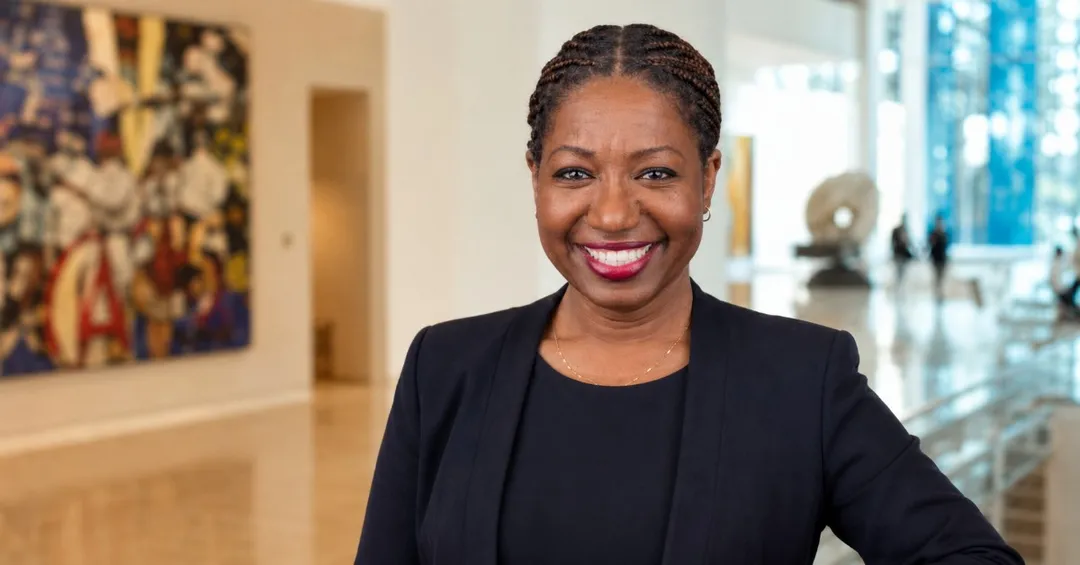
Ashlee K. Thomas has been appointed Director of the Miami-Dade County Department of Cultural Affairs, placing a leader with deep local roots and more than 25 years of cultural-sector experience at the helm of one of the country’s most active public arts agencies.
Miami-Dade County Mayor Daniella Levine Cava appointed Thomas effective July 14, 2026, following a national search for a permanent director. Thomas had served as interim director since September 2025 and as the department’s deputy director beginning in November 2023.
For Miami-Dade’s artists and cultural organizations, the appointment offers something particularly valuable: continuity without simply maintaining the status quo. Thomas already understands the department’s operations, funding responsibilities, cultural facilities, and relationships across the community. At the same time, her career reaches well beyond government administration.
A Career Built Across Miami’s Cultural Ecosystem
Thomas brings the perspective of someone who has worked on several sides of the cultural sector—as an artist, educator, producer, nonprofit leader, marketer, and public administrator.
A Miami native and graduate of the local public-school system, she received some of her early artistic training at the Marshall L. Davis Sr. African Heritage Cultural Arts Center. She later returned to the center professionally, working in marketing and theater programming. Her career has also included education and community-outreach work at the Adrienne Arsht Center, teaching drama at Charles R. Drew K-8 Center, and performing with the Los Angeles-based CONTRA-TIEMPO Urban Latin Dance Theater. (Miami-Dade Arts)
Before joining the County, Thomas co-founded and served as president of Miami Urban Contemporary Experience, better known as MUCE. During eight years of leadership, she oversaw programming, fundraising, operations, staff, and large-scale cultural events. That experience gave her direct familiarity with the practical challenges facing independent artists and small and midsize cultural organizations—the same organizations that often depend most heavily on public grants, technical assistance, partnerships, and accessible cultural space.
Thomas holds a bachelor’s degree in business marketing from Florida State University, a Master of Public Administration from Florida International University, and a Master of Fine Arts from New York University.
Continuity at an Important Moment
The Miami-Dade County Department of Cultural Affairs plays an unusually broad role in the region.
It supports more than 1,000 nonprofit cultural organizations and thousands of resident artists through grants, technical assistance, public information, and community planning. The department also directs Miami-Dade’s Art in Public Places program and manages cultural facilities including the Marshall L. Davis Sr. African Heritage Cultural Arts Center, Dennis C. Moss Cultural Arts Center, Joseph Caleb Auditorium, and Miami-Dade County Auditorium.
Leading that work requires more than artistic knowledge. It requires financial management, coalition building, public-sector experience, and the ability to work across elected leadership, County departments, nonprofit institutions, artists, and neighborhoods with very different needs.
Thomas has already been doing much of that work.
During her interim tenure, she reduced department-wide spending, implemented financial savings, and led public engagement connected to the Coconut Grove Playhouse project, helping move the project toward its next phase. The County’s appointment memorandum cited her administrative judgment, community credibility, and ability to maintain momentum in a shifting funding environment.
Her permanent appointment therefore does not represent a sharp change in direction. It formalizes the leadership of someone who has already been navigating the department through a demanding period.
What the Appointment Signals
The appointment followed a national search, but the County ultimately selected a leader whose experience is deeply rooted in Miami-Dade.
That matters.
Cultural leadership can become disconnected from the realities facing working artists, neighborhood organizations, and smaller institutions. Thomas has firsthand experience building programs, securing funding, managing events, teaching young artists, operating a cultural space, and sustaining an organization beyond a single production or grant cycle.
The County’s appointment memorandum noted that Thomas received consistent nominations and strong support during the recruitment process. That suggests her selection was not based only on internal continuity, but also on the trust she has developed across Miami-Dade’s cultural community.
Her background also brings an entrepreneurial perspective to a public agency. That does not mean treating culture as a conventional commercial product. It means understanding how cultural organizations actually operate—how they assemble funding, develop audiences, manage facilities, build partnerships, and turn ambitious ideas into programs that people can experience.
Expanding Access While Supporting the Organizations That Create Culture
One of the department’s most important ongoing challenges is balancing broad public access with the financial and operational realities facing the organizations that produce cultural programming.
The County’s Arts Energize 305 initiative established priorities that include increasing support for cultural institutions, organizations, and artists; developing arts spaces; engaging residents across more neighborhoods; and building new partnerships. The initiative is intended to expand access to art and culture, particularly in underserved communities. (Miami-Dade County)
Thomas has already been involved in developing cultural-engagement initiatives and connecting nonprofit organizations and individual artists with resources. As director, she will now be responsible for carrying that work forward while overseeing grantmaking, public art, cultural facilities, community planning, and relationships across the County’s cultural infrastructure. (Miami-Dade Arts)
No department director controls the cultural sector’s future alone. County budgets, public policy, private philanthropy, earned revenue, tourism, development, and audience participation all shape what cultural organizations can accomplish.
But leadership still matters. It determines which concerns are heard, how effectively the sector is represented, and whether public resources are administered with an understanding of the people and organizations relying on them.
A Local Appointment With Broader Significance
Miami-Dade’s cultural identity is one of its greatest strengths, but that identity is not sustained by reputation alone. It depends on artists being able to work, organizations being able to operate, residents being able to participate, and cultural spaces being supported across the County.
Thomas enters the permanent role with an uncommon combination of experience: she understands cultural production from the stage, the classroom, the nonprofit office, and County government.
Her appointment gives Miami-Dade a director who already knows the system—and who also knows what it feels like to build culture from within it.
For the region’s artists, cultural organizations, and audiences, the next chapter will be measured not only by the programs the department administers, but by how effectively those programs strengthen the people and institutions that make Miami-Dade’s cultural life possible.