When the Body Carries the Argument: What Makes a Dance Performance Great
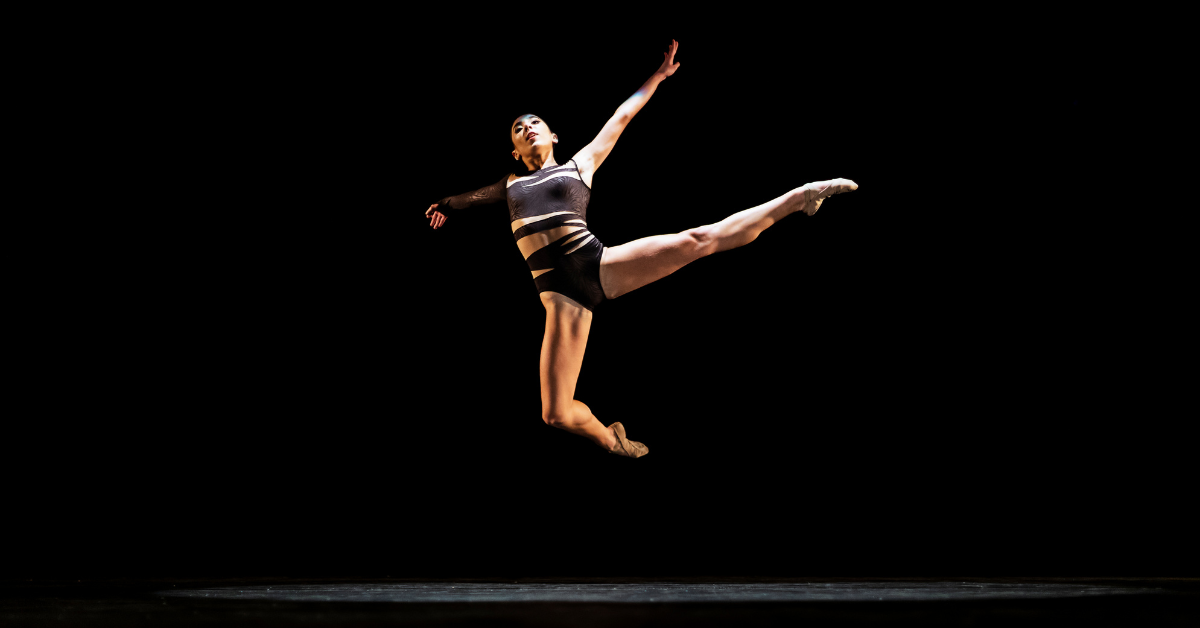
Dance persuades without language. It convinces through structure, presence, and inevitability.Critics across generations return to similar criteria when describing greatness. Arlene Croce wrote of “authority” in movement — a dancer’s ability to command space without excess. Anna Kisselgoff emphasized musical intelligence: the ability to inhabit phrasing rather than simply execute counts. Alastair Macaulay frequently pointed to coherence — whether choreography sustains internal logic from first movement to final stillness.Great dance feels inevitable.
Consider Alvin Ailey’s Revelations (1960). Its power does not rely on virtuosic complexity alone. The choreography moves through spiritual anguish, communal resilience, and celebratory release with structural clarity. The iconic “Wade in the Water” section layers stage geometry, rhythmic precision, and emotional tension so deliberately that the visual pattern becomes inseparable from the music. Critics have long noted that its greatness lies in synthesis: modern technique fused with cultural memory and musical architecture. Nothing feels ornamental.
Every gesture accumulates meaning.
Contrast that with George Balanchine’s Agon (1957), a radically spare neoclassical work. Where Ailey layers narrative and cultural resonance, Balanchine strips ballet to its skeletal mechanics. The pas de deux is angular, almost austere. Its greatness lies in structural audacity — asymmetry, unexpected musical accents, tension between balance and destabilization. The work endures not because it is lush, but because its internal logic is relentless.
Different aesthetics. Same discipline.
William Forsythe’s In the Middle, Somewhat Elevated (1987) fractured classical vocabulary, stretching limbs beyond expected lines, accelerating momentum to near-violent speeds. What made it endure was not extremity alone but rigor. The distortion followed rules. Critics observed that beneath the aggression was precise architectural thinking. When experimentation lacks that scaffolding, it dissolves. When it possesses it, it redefines form.
So what distinguishes a great dance performance from a merely competent one?
Three elements consistently surface:
1. Structural Clarity
Great choreography builds. Spatial patterns evolve. Energy escalates or contracts with intention. Even in abstraction, there is progression. Jerome Robbins’ Dances at a Gathering (1969) appears casual, almost conversational, yet its use of Chopin’s phrasing and shifting group dynamics reveals meticulous compositional control. What feels effortless is carefully constructed.
2. Musical Intelligence
Dance is not movement set to music; it is movement that inhabits music. Critics often praise dancers who “phrase” rather than count. Mikhail Baryshnikov was admired not only for elevation and speed, but for elasticity — the way he stretched time within a phrase without losing structure. Margot Fonteyn’s artistry was similarly rooted in musical sensitivity. Technique creates possibility; musicality creates resonance.
3. Presence
Presence is the least quantifiable and most decisive element. It is not charisma in a theatrical sense. It is density — a fullness of intention that makes stillness as charged as motion.
In Revelations, the solo “I Wanna Be Ready” depends on weight and breath as much as extension. The dancer’s control of suspension communicates vulnerability without melodrama. In contemporary works by choreographers like Crystal Pite, the power often lies in collective presence; ensembles moving as a single organism, every performer calibrated to shared tension.
Great dancers balance athleticism with restraint. They understand that virtuosity without intention reads as display. Technique must serve architecture.
Dance falters when movement feels decorative. When lifts exist for applause rather than structural necessity, when complexity substitutes for clarity. Spectacle may dazzle briefly, but it rarely sustains repertory life.
Scale does not determine greatness.
A performance at the Bolshoi must project across vast space; a contemporary work in a 120-seat theater relies on micro-detail. In both cases, the criteria remain constant: coherence, musical intelligence, and embodied conviction.
Dance is unforgiving because it exposes weakness instantly. There is no script to contextualize ambiguity. The body must carry the argument entirely.
When choreography aligns with disciplined execution and interpretive depth, the result transcends trend or era. The audience senses inevitability; that the work could not exist in another form.
That is what endures.
Not spectacle. Not novelty. But structure made visible through the body.
Similar Posts
Dior and SCAD: Inside a Rare Collaboration Between Fashion House and Art School

Balloon Museum Expands Its Global Tour With POP AIR – Art Is Inflatable
A love letter in couture: Dolce&Gabbana at ICA Miami
The Joy of Sitting in the Front Row at a Small Theater
The Unspoken Magic of Opening Nights
10 Cities That Belong on Every Cultural Traveler’s Bucket List

Funding the Arts at Home, Pulling Back Abroad

Artists Are Not Being Replaced by AI—And the Fear Misses the Deeper Truth

New World School of the Arts Alum Leonardo Castañeda Selected for the 2026 Whitney Biennial
Crossroads of Culture: Highlights from Art Basel Miami Beach 2025

Spotlight Series: Artists who took center stage during Miami Art Week