A dual Miami tasting paired historic Tuscan elegance with California's modern renaissance.
Miami's reputation as a destination for fine wine continues to grow, drawing acclaimed critics, celebrated winemakers and increasingly discerning wine enthusiasts to our backyard. Few events capture that momentum quite like Vinous Icons: Miami.
On Saturday, November 14, the third edition of the event, presented by Capital One, returned to Bloom at Jungle Island with a full day of exceptional tastings and masterclasses. At the center of the program was a compelling doubleheader: an exploration of Tuscany's celebrated Sangiovese wines followed by a deep dive into Sonoma's evolving wine landscape. Together, the sessions offered a closer look at the people, places and philosophies shaping two distinctive wine regions.
"Miami is one of the most dynamic wine markets in the world. Vinous Icons gives guests an incredible opportunity to explore a stunning array of wines while forging meaningful connections with the people who make them," said Vinous Founder Antonio Galloni. "Every estate here is exceptional; every wine is worth discovering."
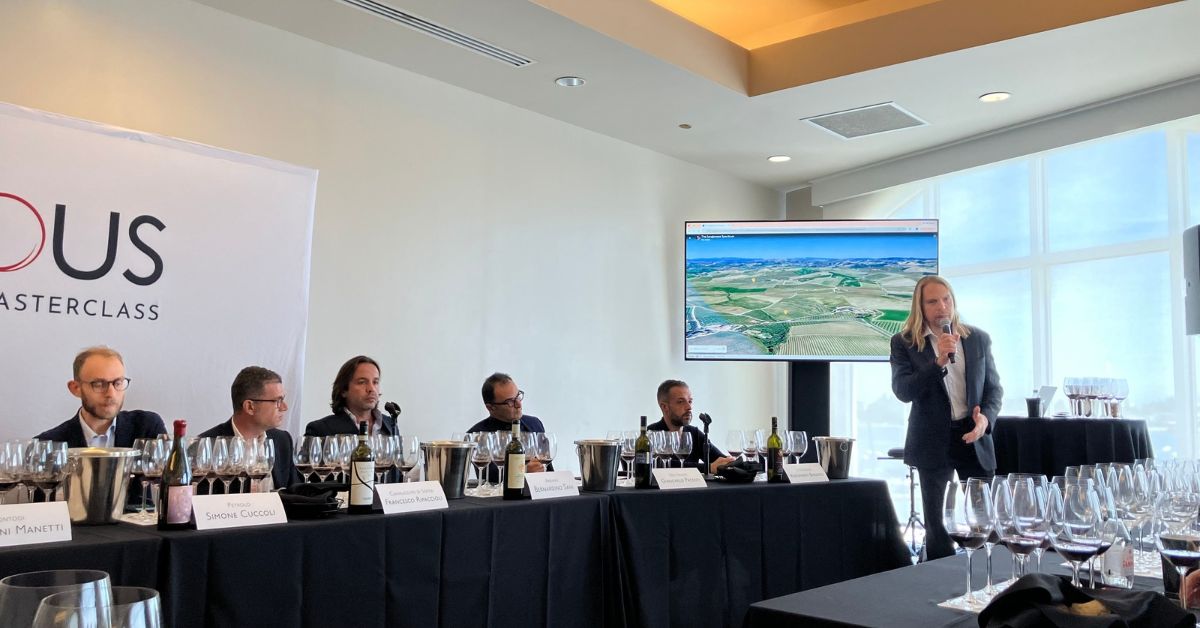
The day kicked off with Vinous Editor Eric Guido leading The Sangiovese Spectrum, an ambitious comparative tasting spanning Carmignano, Chianti Classico, and Montalcino. Drawing on his extensive background covering Italian wine, Guido guided attendees through the diverse terroirs and varied expressions of Sangiovese while demystifying one of Italy's most celebrated and shape-shifting grapes.
"From the bottom of my heart, this is a special group of people that we managed to bring together. The whole reason why I created this Sangiovese Spectrum masterclass is the variety you see when you go all throughout Tuscany. You find so much diversity. My idea was to be able to show you those different locations and to hear it directly from these producers: the many generations and the tradition of winemaking that is brought to our tables today. If we think about an area like Chianti Classico, think about the value it has delivered to us over and over and over again. And, also think about the heights that it can reach, and how it can stand shoulder to shoulder with the absolute best wines from the world. But now we see that it's not just about value. It actually represents from that bottom level all the way up to the top," said Eric Guido, Vinous Editor.
Guido added, "Brunello built a brand that spoke to people of the importance of Sangiovese, like no other region. Much earlier in history. Think about Super Tuscans. Think about that blending of Sangiovese with international varieties, or the producers that were able to make pure Sangiovese outside of DOCG, like Montalcino, and the amazing popularity they gained."
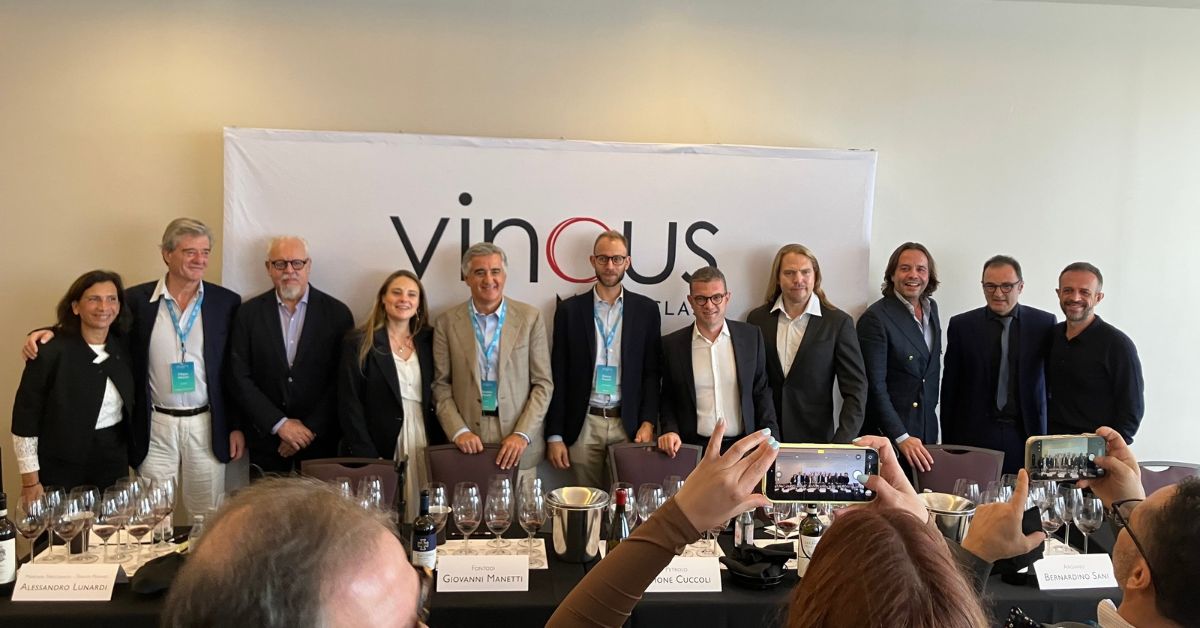
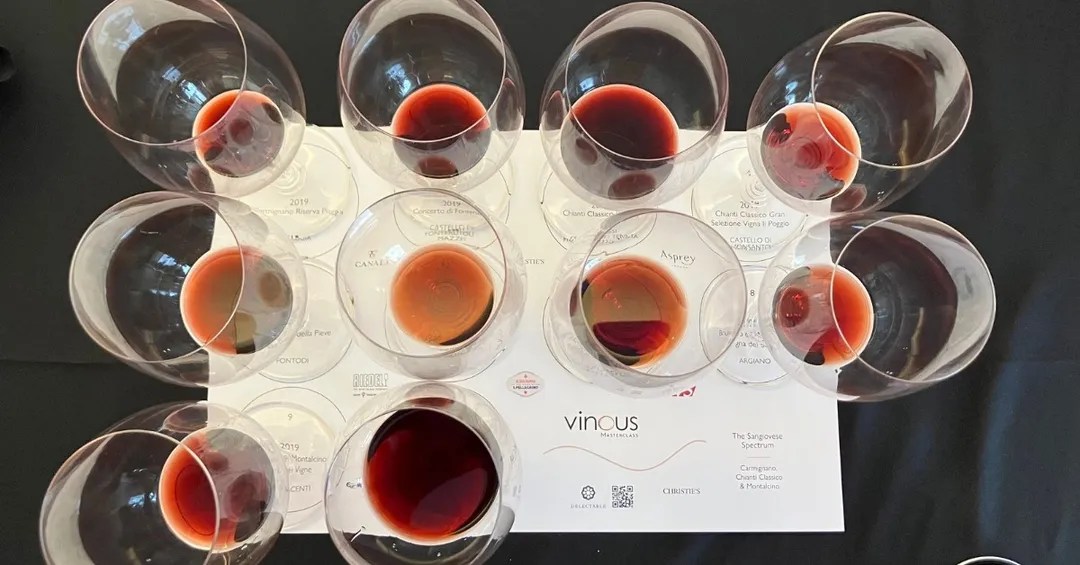
Guido's lineup brought together some of Tuscany's most celebrated estates, with the 2019 vintage taking center stage. As he noted, "the bottles are just beginning to open up." The tasting offered a compelling look at how dramatically Sangiovese can express differences in elevation, soil and place, even within the same region.
2019 Piaggia's Carmignano Riserva combines ripe blackcurrant and raspberry with hints of lavender, cocoa, tobacco and violets, backed by a subtle mineral note.
2019 Castello di Fonterutoli Concerto di Fonterutoli brings together red cherry, raspberry and dark currant with notes of chocolate, Mediterranean herbs, tobacco and toasted oak.
2019 Marchesi Frescobaldi's Tenuta Perano Chianti Classico Riserva features ripe black cherry and mulberry flavors with hints of baking spice and toasted walnut, balanced by smooth, structured tannins.
2019 Castello di Monsanto Vigna Il Poggio Chianti Classico Gran Selezione offers rich dark berry and cranberry flavors, lively acidity and firm, mineral notes. "We are around 1,050 feet above sea level, on the western side of the village, in this open valley. It really helps to mitigate the temperatures as we have a constant breeze coming inside the vineyards," said Giulia Cecchi.
2019 Fontodi's Flaccianello della Pieve is anchored by vibrant freshness and deep earthy notes. Giovanni Manetti shared, "There are some facts that mark the Flaccianello. First of all, the location. Panzano is a tiny village between Florence and Siena in the heart of the Chianti Classico zone. There's lots of light and it's quite warm during the day, but extremely cold at night because of the main river down below. It's an unbelievable temperature range. So, the wines from this region are rich and muscular with a solid structure and very high acidity. This is the identity and personality of the wine."
2019 The Bòggina C "Grand-Cru" by Tenuta di Petrolo is fermented and aged in concrete rather than oak barrels, allowing its fresh fruit flavors to shine alongside notes of white flowers, herbs and earth.
2019 Cannolicchio di Sopra Vigna La Casaccia Brunello di Montalcino combines rich dark fruit with hints of eucalyptus and balsamic, finishing with earthy, mineral notes.
2019 Argiano Brunello di Montalcino Vigna del Suolo balances bright fruit with wild herbs and mineral notes, offering lively acidity and a firm, elegant finish.
2019 The Siro Pacenti Brunello di Montalcino Vecchie Vigne features fresh dark fruit and dried floral notes, with smooth tannins, a velvety texture and a long, complex finish.
2019 Il Poggione Brunello di Montalcino offers fragrant notes of rose petals and mulberry, with flavors of pomegranate and blueberry, hints of jasmine and a touch of French oak.
Next, Antonio Galloni himself stepped up for Sonoma: What's New Under the Sun?, exploring emerging estates and evolving vineyards shaping the region's next chapter. Blending a Berklee jazz education with an MIT Sloan MBA, Galloni judges wine by its rhythm rather than a rigid formula. As a leading wine critic and founder of Vinous, he draws on twenty years of California expertise.
Galloni's flight united standout 2023 and 2024 vintages, showcasing the diversity and evolving character of Sonoma wines. From coastal vineyards to mountain-grown grapes, the tasting highlighted a new generation of producers building on the region's rich winemaking heritage while bringing fresh perspectives to the glass.
He selected three flights of three, ending with Chardonnays. "The goal of today is to explore new things. We're going to start off with three flights of Pinot Noirs, then we'll taste three wines that are Bordeaux-based varieties, and finally we'll taste whites at the end. We're going to taste whites at the end because my view is that white wine is often given a real short shrift in the world of fine wine. Everybody always thinks you have a glass of white wine, and then you have real wines, meaning the red wines," said Galloni. "It's interesting to me that in Burgundy or Bordeaux, you always taste the white wine after the red. Everywhere. One of the greatest culinary things you can do is have a really nice white wine at the end of a meal, with cheese or something. And so that's why I wanted the whites to go at the end, as opposed to being the precursor to the red wines."
2023 Merry Edwards Pinot Noir Warren's Hill opens with dark berries and Rainier cherry, complemented by savory herbal notes, smooth tannins and a lingering finish with hints of forest floor.
2023 Amici Cellars Pinot Noir Lytton Annapolis Vineyard features lush red cherry, blood orange, and kirsch layered with dried florals, subtle blossoms and warm spice. Tony Biagi said, "This vineyard is about 60 acres in total, and is surrounded by redwoods. It's above the fog line, which helps the fruit ripening. The grapes hang for a very, very long time, and so we only get about a ton to maybe a ton and a half an acre off of this. We harvest a small portion of the vineyard to pull from and typically make about 150 cases per year."
2023 Occidental SWK Vineyard Pinot Noir brings together smoky mineral notes and sweet red fruit, followed by tart red currants, wild strawberries and black tea, with a savory, sea-breeze finish.
2023 Repris Right Bank Moon Mountain Vineyard pairs vibrant dark berry flavors with hints of white pepper and earthy notes, finishing with a crisp mineral edge. "I just finished my 16th harvest on this site, and we have about 70 acres planted of this wine on this hill. I've been making wines off this particular hill and different vineyards in the area going back to the late '90s. And, this place is just starting to come into its own," shared Erich Bradley.
2024 Monte Rosso Estate The Impression combines fragrant notes of ripe cherry, cardamom and star anise with flavors of blackberry, blood orange and warm spice, balanced by smooth, fine-grained tannins.
2023 Hamel Family Wines Cabernet Sauvignon Nuns Canyon Vineyard Pamelita brings together black cherry and plum with savory hints of bay leaf, wild herbs and earthy notes.
"Chardonnay, especially in Sonoma and some of these areas, it's such a special wine. It's also really interesting that consumer taste has really shifted much more to white wines. When we did this exact event two years ago here in Miami, people said it was great but there wasn't enough white wine. And that was quite a shock to me, and we've taken that really great feedback to heart," Galloni added.
2024 Donum Chardonnay The Heron offers ripe pineapple and orchard fruit flavors, subtle vanilla and a rich, velvety texture, with a long, smooth finish. "What's particularly pertinent for what we'll see in the glass today is a new approach to the farming and the winemaking following that farming, and in particular a shift to regenerative farming, regenerative organic farming," shared Mark de Vere.
2024 Knights Bridge Winery Chardonnay Kelley combines stone fruit and lemon custard with hints of roasted nuts, tangerine and toasted pastry, wrapped in a rich, creamy texture.
2024 Platt Vineyard Estate Reserve Chardonnay brings together bright citrus, green apple and almond notes, with a touch of sweet tangerine and a crisp mineral finish.
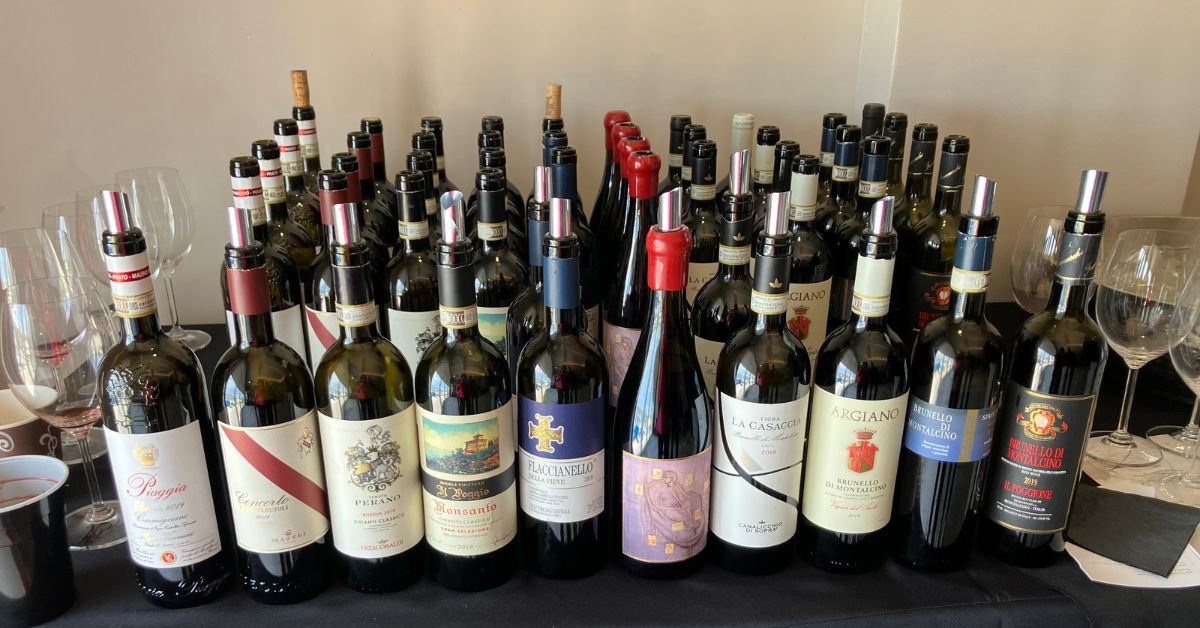
From Tuscany's historic Sangiovese vineyards to Sonoma's evolving wine landscape, both masterclasses underscored the influence of place, tradition and the vision of the people behind each bottle.
By the time the final glass was poured, Vinous Icons had offered a compelling exploration of what makes these regions and their wines so distinctive. For Miami's growing community of wine enthusiasts, it was an opportunity to learn directly from the critics and producers shaping the conversation. Cheers to that!
For more information, visit: vinous.com