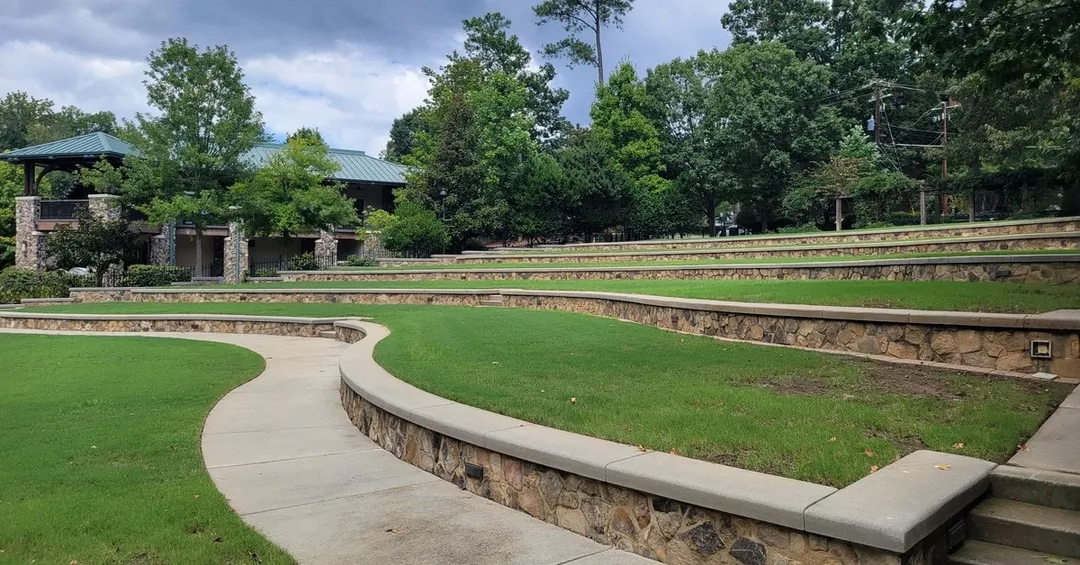

Two blocks off the busiest sidewalk in Palm Beach County, the art starts and the crowd thins.
Most people meet Delray Beach on Atlantic Avenue — the palms, the patios, the slow parade of people deciding where to eat. That version of the city is real, and it's fun. But it isn't the interesting part.
Walk one block north, into Pineapple Grove, and the volume drops. A mural covers a wall you weren't looking at. A garage door is open and someone is welding. A 1925 high school auditorium sits across the street from a 1913 elementary school that now hangs Italian mosaic portraits of rock stars. Delray calls itself the Village by the Sea, which sounds like a slogan until you notice that the whole cultural district really does fit inside a fifteen-minute walk.
This is a guide for people who want that version — the working studios, the free galleries, the community theater on a lake, the neighborhood that predates almost everything else here. Bring comfortable shoes. You won't need a car for most of it.
A short history: the railroad, the farmers, and the settlement that came first
Delray's story doesn't start with tourism. In 1894, a community of Black settlers — many from Georgia, Florida and South Carolina — established what became the West Settlers Historic District, the city's first neighborhood. They built their own homes, businesses, churches and commerce along what is now NW 5th Avenue, largely self-sufficient, years before the surrounding town took shape.
Four years later, John Sundy arrived from South Carolina as a construction superintendent for the Florida East Coast Railway. The story locals still repeat: Henry Flagler told him "there's nothing here," and Sundy answered, "there will be." He became Delray's first mayor when the town incorporated in 1911 and was re-elected eight times. His 1902 house still stands on South Swinton Avenue, on the National Register of Historic Places.
Then came the schools that would eventually become the arts. Delray Elementary went up in 1913. Delray High School and its gymnasium followed in 1925. When the county planned to close the aging campus in the 1980s, residents organized instead of demolishing — and the buildings were reborn as Old School Square, the six-acre cultural campus at Atlantic and Swinton that anchors downtown to this day.
That's the pattern worth knowing about this city: Delray tends to keep its buildings and change their purpose.
Pineapple Grove: the arts district that actually makes things
Pineapple Grove Arts District sits one block north of Atlantic Avenue, and it's the densest culture you'll find per square foot in Palm Beach County. Galleries, working studios, sculpture, restaurants, and more than 40 murals across the greater downtown.
Start at the Arts Warehouse on NE 3rd Street. It's a 15,000-square-foot warehouse conversion opened by the Delray Beach Community Redevelopment Agency in 2017, and it functions as an incubator as much as a gallery — resident artist studios, workshops, and rotating exhibitions in the front, east and back-room galleries. Recent shows have run from upcycled-material sculpture to large-scale watercolor installation. Admission is free, and the building reopened in June 2026 after a full renovation, so the floors and galleries are in the best shape they've been in years.
From there, wander. Addison Gallery on NE 2nd Street shows contemporary painting with a serious program of solo exhibitions. Independent studios and design shops fill the gaps between. And the district's unofficial mascot, the Dancing Pineapple mural, is one of the most photographed walls in the city — corny, beloved, worth the detour.
The murals are not a side attraction here. The Delray Beach Downtown Development Authority curates them into the Delray Art Trail, a self-guided route through downtown murals, sculptures and installations, with an online map. It costs nothing, takes as long as you want, and it is the single best way to understand the city's visual personality in an afternoon.
Old School Square: a schoolhouse, a museum, and an honest note about the theater
Cross back to Atlantic and Swinton and you're on the Old School Square campus — the restored early-20th-century school buildings, listed on the National Register of Historic Places, plus an amphitheatre, the Vintage Gym and a public park.
The Cornell Art Museum, in the 1913 schoolhouse, is the reason to come. It runs several exhibitions at once across upper-level galleries and a spotlight gallery, and the curation is more adventurous than you'd expect from a small-city museum: Italian mosaic portraits of cultural icons made with the Scuola Mosaicisti del Friuli, surrealist Florida landscapes connected to the Highwaymen movement, group shows built entirely from discarded materials. Admission is free — donations appreciated, and special events may carry a fee. Hours have shifted over the past year, so check before you go, and note that Monday and Tuesday are typically closed.
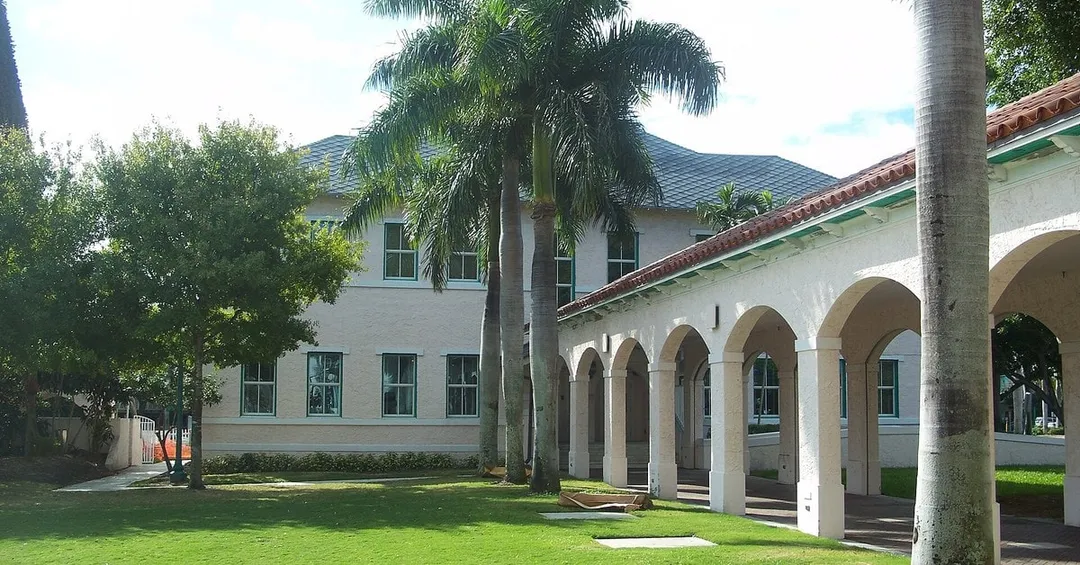
Across the lawn stands the Crest Theatre, and it has the better story. The building went up in 1925 as Delray's high school, in the Mediterranean Revival style the boom years loved — arched arcade, barrel-tile roof, tall paired windows. Its auditorium became a 323-seat theater, small enough that the back row still feels close to the stage, and for decades it was the room where Delray saw cabaret, dance and touring plays.
It is worth knowing before you plan around it: the Crest is not staging performances at the moment while it waits on a major restoration. The classrooms alongside it are very much alive — the campus arts school has been expanding its schedule — and the whole campus is owned by the City of Delray Beach and managed with the Downtown Development Authority. If you find an old listing promising a show at the Crest, check the date.
The Set: Black history on NW 5th Avenue
Six blocks from the restaurant crowds, the Spady Cultural Heritage Museum occupies the circa-1926 Mission Revival home of Solomon D. Spady, Delray's most prominent Black educator and community leader. Founded in 2001, it is the only museum in Palm Beach County dedicated to the history and heritage of the African diaspora in Florida and the U.S. The Spady House turns 100 in 2026, and the museum is running a centennial preservation campaign.
Go for the exhibitions, but the neighborhood itself is the artifact. The West Settlers district — known locally as The Set — still shows its origins in frame vernacular, Bungalow and Mission Revival houses, several built by the community's own early builders. Historical markers along NW 5th Avenue tell you what stood where: the doctor's offices, the soda fountain, the pharmacy that was the only one serving the Black community.
This is the part of Delray most visitors never see, and it's a fifteen-minute walk from the beach end of Atlantic.
First Friday Art Walk, and the rest of the monthly rhythm
First Friday Art Walk is the anchor event: the first Friday of every month, all year, 6–9 p.m. It's a self-guided tour of downtown galleries, artist studios and cultural centers, produced by the Downtown Development Authority, with pop-up live music at select locations and a participant map published each month. Artist meet-and-greets, occasional workshops, no ticket.
The Cornell Art Museum opens as a stop on the walk, which means you can see a full slate of exhibitions and hear live music for the price of nothing at all. Remaining 2026 dates: October 2, November 6, December 4.
Beyond that, the seasonal rhythm matters more than a fixed calendar. Delray's cultural year builds from October through May, when galleries schedule their strongest openings, the amphitheatre programs outdoor concerts, and the street festivals return. Summer is quieter and more local — better for studio visits and museum time, worse for one-night-only events. If you're planning around a specific weekend, check what's actually on the calendar rather than trusting the season.
Stages, screens and pinball
Delray Beach Playhouse, on Lake Ida a few minutes from downtown, is one of the oldest nonprofit community theaters in South Florida and the most consistently active stage in the city. The 2026–2027 season leans crowd-pleasing and broad: 42nd Street, Beehive: The 60s Musical, Hairspray, Groundhog Day, The Boynton Beach Club, The Shawshank Redemption, plus tribute concerts, cabaret and children's productions. Tickets start around $45 for main stage musicals — reasonable for the region, and the room is small enough that no seat is a bad one.
Arts Garage, back in Pineapple Grove on NE 2nd Avenue, is the live-music heart of downtown. It hosts close to a thousand performers a year in the Stuart & Shelby Theatre — jazz, blues, soul, Latin, singer-songwriters, tributes — and it turned 15 in 2026. Tickets typically run $28–$65, which for a listening-room seat is a genuine bargain. Its Marshall Family Foundation Gallery shows regional and emerging visual artists, so there's something to look at before the set. Their stated mission is #AccessForAll, and the programming reflects it.
And when you want culture with less reverence: Silverball Retro Arcade on NE 3rd Avenue keeps more than 150 vintage and modern pinball and arcade machines running until midnight most nights, 1 a.m. on weekends. It's a museum you're allowed to touch.
How to spend a day here
Morning. Coffee in Pineapple Grove, then the Arts Warehouse when it opens. Galleries are quietest early and the artists are more likely to talk.
Midday. Walk the Delray Art Trail north and west — murals, sculpture, the odd courtyard installation. Detour to NW 5th Avenue for the Spady Museum and the historical markers.
Afternoon. The Cornell Art Museum at Old School Square. Sit in the park afterward; the campus is built for lingering.
Evening. A show at Arts Garage or the Playhouse. If it's the first Friday of the month, skip the plan entirely and follow the Art Walk map.
Practical notes: downtown Delray is genuinely walkable and parking near Atlantic Avenue is the hard part, so park once and leave the car. Most of the day above costs nothing — the Art Trail, the Cornell, the Arts Warehouse and the Art Walk are all free — which makes this an unusually easy city to explore on a small budget. And check hours before you go; several of these institutions have adjusted them recently.
Frequently asked
What are the best arts and culture things to do in Delray Beach?
The Cornell Art Museum at Old School Square, the Arts Warehouse and galleries of the Pineapple Grove Arts District, the self-guided Delray Art Trail of 40-plus downtown murals, live music at Arts Garage, theater at the Delray Beach Playhouse, and the Spady Cultural Heritage Museum in the historic West Settlers district.
Is there anything free to do in Delray Beach?
Yes. Admission to the Cornell Art Museum is free (donations appreciated), the Arts Warehouse is free, the Delray Art Trail is a free self-guided mural and sculpture route, and the monthly First Friday Art Walk is free to attend, including its pop-up live music.
When is the Delray Beach art walk?
First Friday Art Walk runs the first Friday of every month, 6–9 p.m., in downtown Delray Beach. Remaining 2026 dates are October 2, November 6 and December 4.
Where is the Pineapple Grove Arts District?
One block north of Atlantic Avenue in downtown Delray Beach, centered on NE 2nd Avenue, with the Arts Warehouse at 313 NE 3rd Street.
Can you see a show at the Crest Theatre?
Not at the moment. The Crest Theatre at Old School Square is awaiting a major renovation and is not staging performances, though arts classes are running in the building. Arts Garage and the Delray Beach Playhouse are the city's active stages.
Is Delray Beach walkable for a culture day?
Yes — Old School Square, Pineapple Grove and the Art Trail are all within about a fifteen-minute walk of each other. The Delray Beach Playhouse on Lake Ida and the Spady Museum are short drives or longer walks.
Delray Beach's cultural calendar changes weekly. See what's on now: Delray Beach events · things to do · art & museums · live music · theater · this weekend · Delray Beach venues
Photo: Ebyabe, CC BY-SA 3.0, via Wikimedia Commons