Comparison Guide
Best Event Ticketing Software for Arts Organizations
The best event ticketing software for arts organizations should not only help an organization sell a ticket. It should help build the conditions that make someone want to attend in the first place.
In the arts, the ticketing conversation often starts with fees, reserved seating, box office tools, and checkout. Those things matter. But they are only part of the problem. The deeper issue is that many arts organizations are still working inside fragmented systems that separate ticketing from promotion, audience growth, patron relationships, reporting, and discovery.
That fragmentation has a real cost.
A theater may sell tickets through one platform, promote events through another, manage email lists somewhere else, track audience data in spreadsheets, and rely on social media algorithms to reach new people. A museum may have timed entry, memberships, classes, donor communications, and public programs spread across disconnected tools. A festival may need event listings, sponsor visibility, multi-event promotion, ticketing, and audience reporting, but each part of the workflow lives in a different place.
The result is not just operational inefficiency. It is missed audience growth.
For arts organizations, the biggest question is not only “Which platform can sell tickets?” The better question is:
Which platform helps us get discovered, build trust, reach new audiences, and turn interest into attendance?
That is where the ticketing industry needs to move next.
What arts organizations need from ticketing now
Arts organizations need ticketing systems that understand the full audience journey.
Before someone buys a ticket, they need to know the event exists. They need context. They need to understand why it matters. They need to see the event through a trusted source, at the right time, in a format that makes it easy to imagine themselves there.
That is very different from a generic event checkout.
A strong ticketing platform for the arts should support:
- Event discovery and audience growth
- Event promotion and organization visibility
- Online ticket sales and mobile-friendly checkout
- Low and predictable ticketing fees
- Box office workflows for staff, walk-up sales, order lookup, comps, holds, and scanning
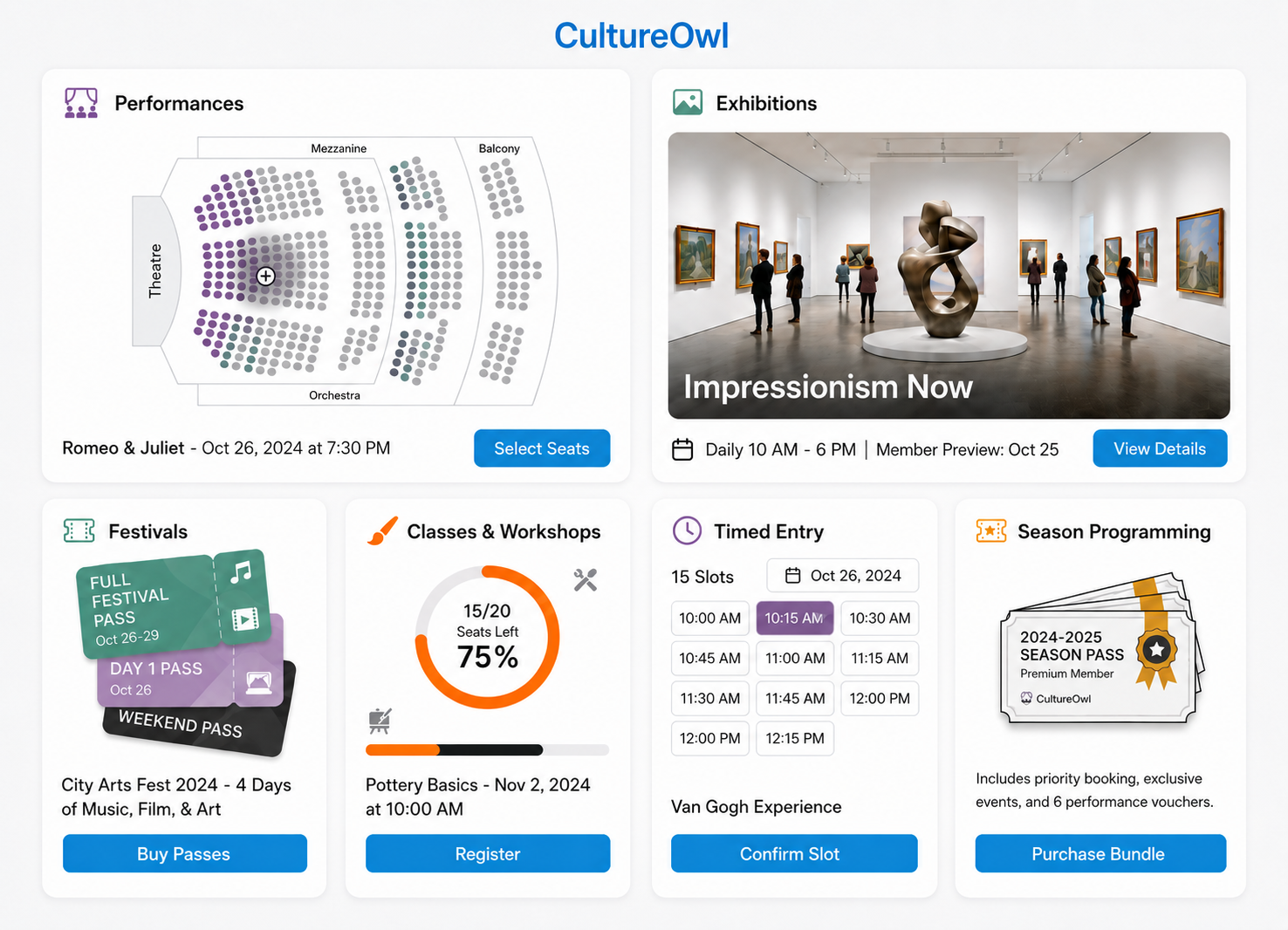
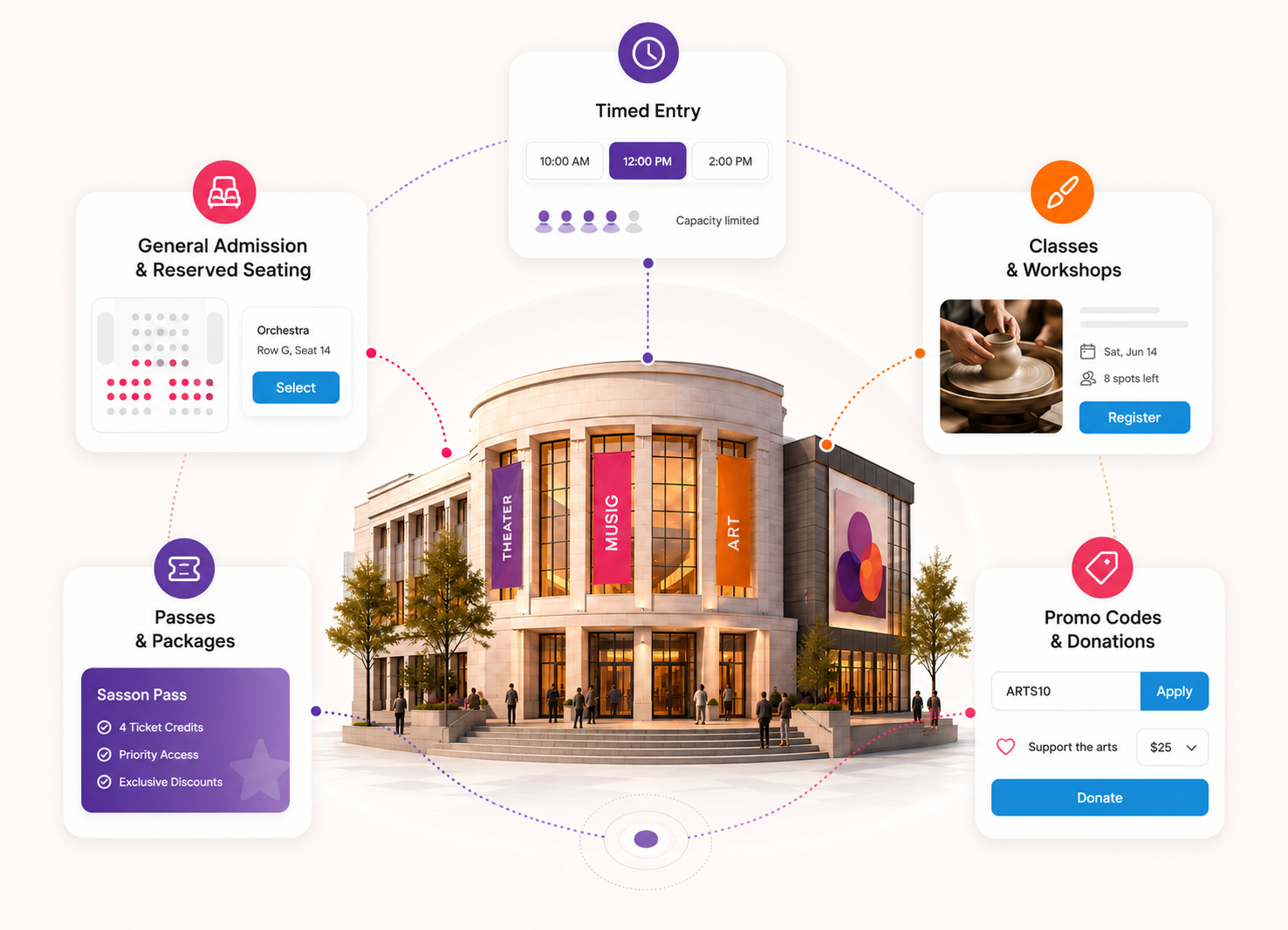
- Complex seating configurations, including reserved seating, general admission, timed entry, and multi-zone events
- Subscription series, season packages, flex passes, memberships, donor packages, and bundled offers
- Donations, fundraising, and donor cultivation tools
- CRM, marketing, and patron relationship tools in one centralized event commerce system
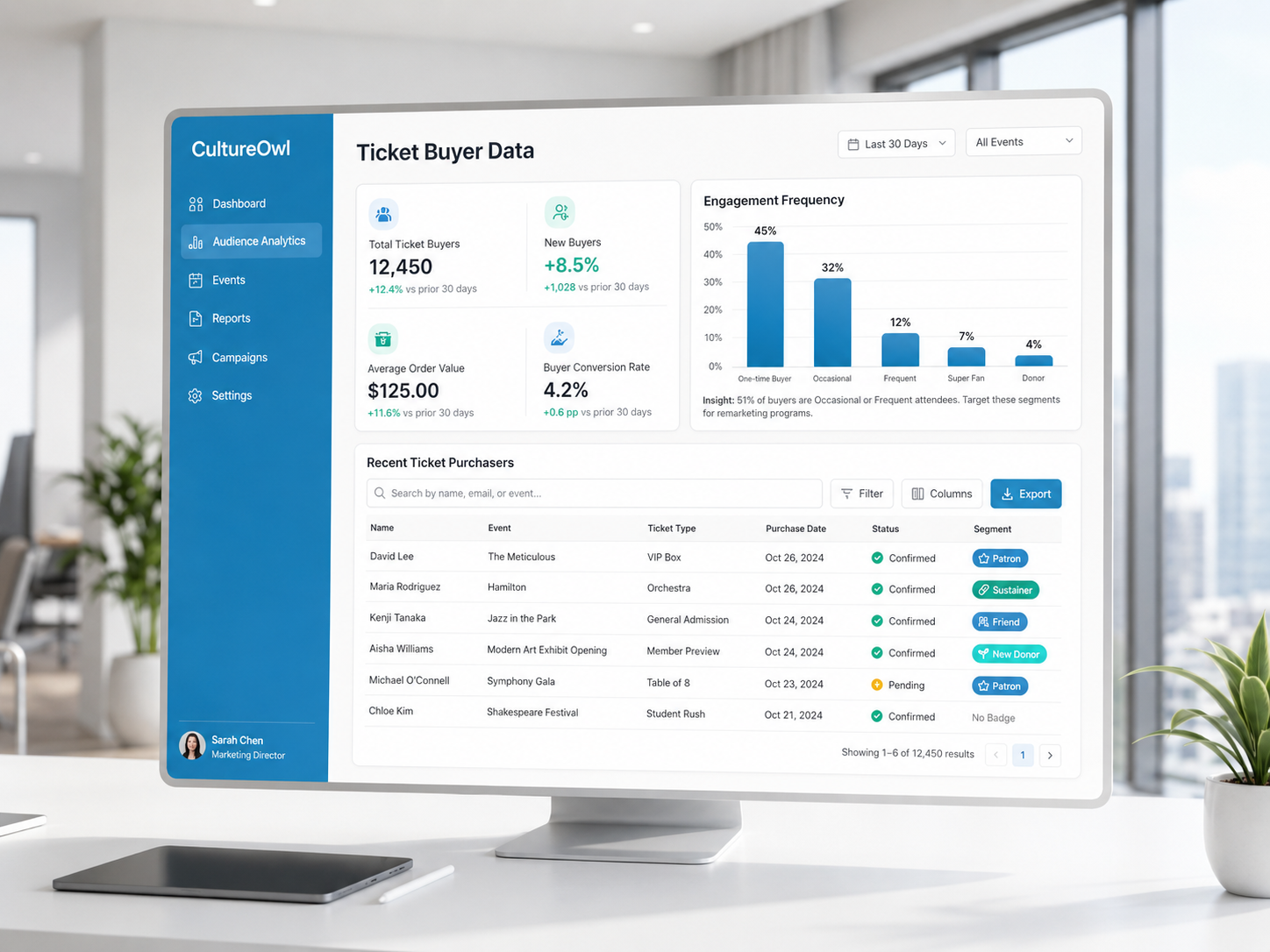
- Audience analytics, segmentation, and reporting that help organizations understand who is attending and where growth is coming from
- Promotion tools that support both ticket sales and long-term audience development
- Flexibility for performances, exhibitions, festivals, classes, workshops, public programs, and high-demand sales
- The ability to scale from smaller theaters and community arts groups to larger institutions with more complex ticketing needs
The future of arts ticketing is not just lower fees or cleaner checkout. It is a more connected system where discovery, promotion, ticketing, CRM, fundraising, analytics, and audience development work together.
Why audience growth belongs in the ticketing conversation
Many ticketing platforms begin once demand already exists. They help process the sale after someone has decided to attend.
But arts organizations often need help much earlier than that.
They need to reach people who are not already on their email list. They need to show up in front of people who would attend if the event felt relevant, accessible, and easy to understand. They need ways to build new audiences without relying only on paid ads, social media posts, or repeat buyers.
That is why audience growth should be part of the ticketing conversation.
A platform built for the arts should not only ask, “Can this organization sell tickets?” It should also ask:
- Can people discover the event?
- Can the organization build a recognizable presence?
- Can the event reach people beyond the existing patron base?
- Can the platform help explain the value of the experience?
- Can reporting show what actually drove interest and attendance?
- Can the organization grow its audience over time?
The strongest ticketing software for arts organizations is not just a payment processor. It is part of the growth infrastructure.
How this guide evaluates the best event ticketing software for arts organizations
This guide compares platforms based on how well they serve the real needs of arts organizations, not just whether they can create an event page. The most important evaluation criteria are:
Audience growth and discovery
Does the platform help arts organizations get in front of new people, or does it only process demand that already exists?
Promotion and visibility
Does the platform support event promotion, organization pages, marketplace exposure, editorial visibility, or other ways to help events be found?
Ticketing and checkout
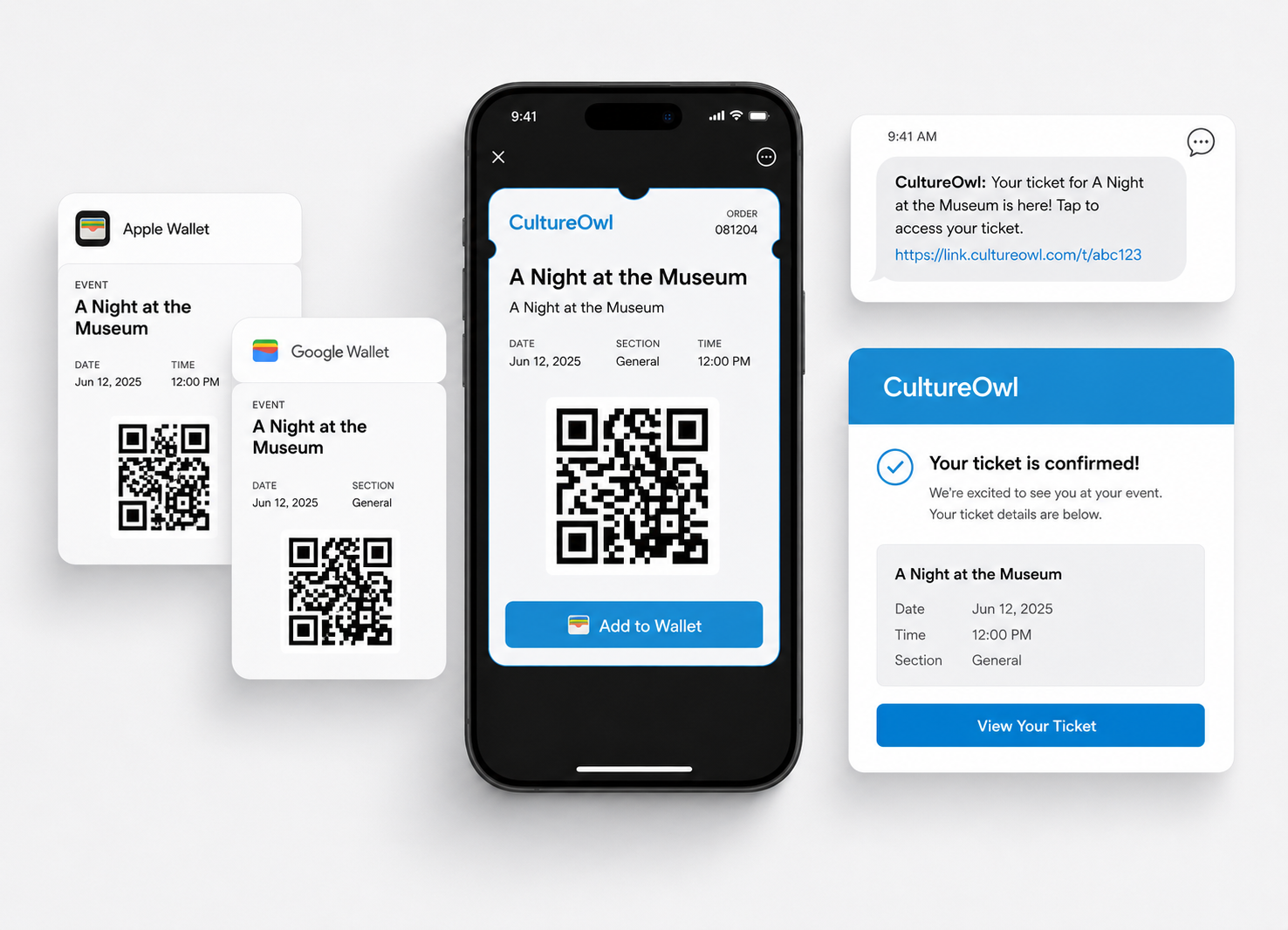
Does the platform support online sales, mobile checkout, ticket delivery, refunds, and a simple buyer experience?
Box office and operational tools
Does the platform support walk-up sales, order lookup, staff permissions, scanning, comps, holds, and venue workflows?
Arts-specific flexibility
Can it handle performances, exhibitions, festivals, classes, workshops, memberships, donations, timed entry, reserved seating, subscription series, flex passes, donor packages, and multi-event programming?
CRM, marketing, and fundraising
Does the platform connect ticketing with patron relationships, email marketing, donations, memberships, donor cultivation, and fundraising workflows?
Analytics and audience segmentation
Does the platform help organizations understand sales, attendance, audience behavior, promotion performance, segmentation opportunities, and where growth is coming from?
Fee structure
Are costs clear, predictable, and reasonable for organizations that often operate with tight margins?
Scalability and demand management
Can the platform support both smaller arts organizations and more complex ticketing needs, including reserved seating, subscription series, flex passes, donor packages, and high-demand sales?
Fit by organization type
Is the platform better for small arts organizations, theaters, museums, festivals, performing arts nonprofits, or large institutions?
1. CultureOwlTop pick
Best for: Arts organizations, museums, theaters, festivals, classes, cultural nonprofits, local venues, arts groups, and cultural partners that want ticketing connected to event discovery, promotion, audience growth, and reporting.
CultureOwl is built around a different problem than most ticketing platforms. Many systems start at checkout. CultureOwl starts earlier in the audience journey by helping people discover cultural events, understand what is happening around them, and connect with arts organizations before they buy a ticket.
That matters because arts organizations are not only competing on ticketing features. They are competing for attention, trust, context, and attendance.
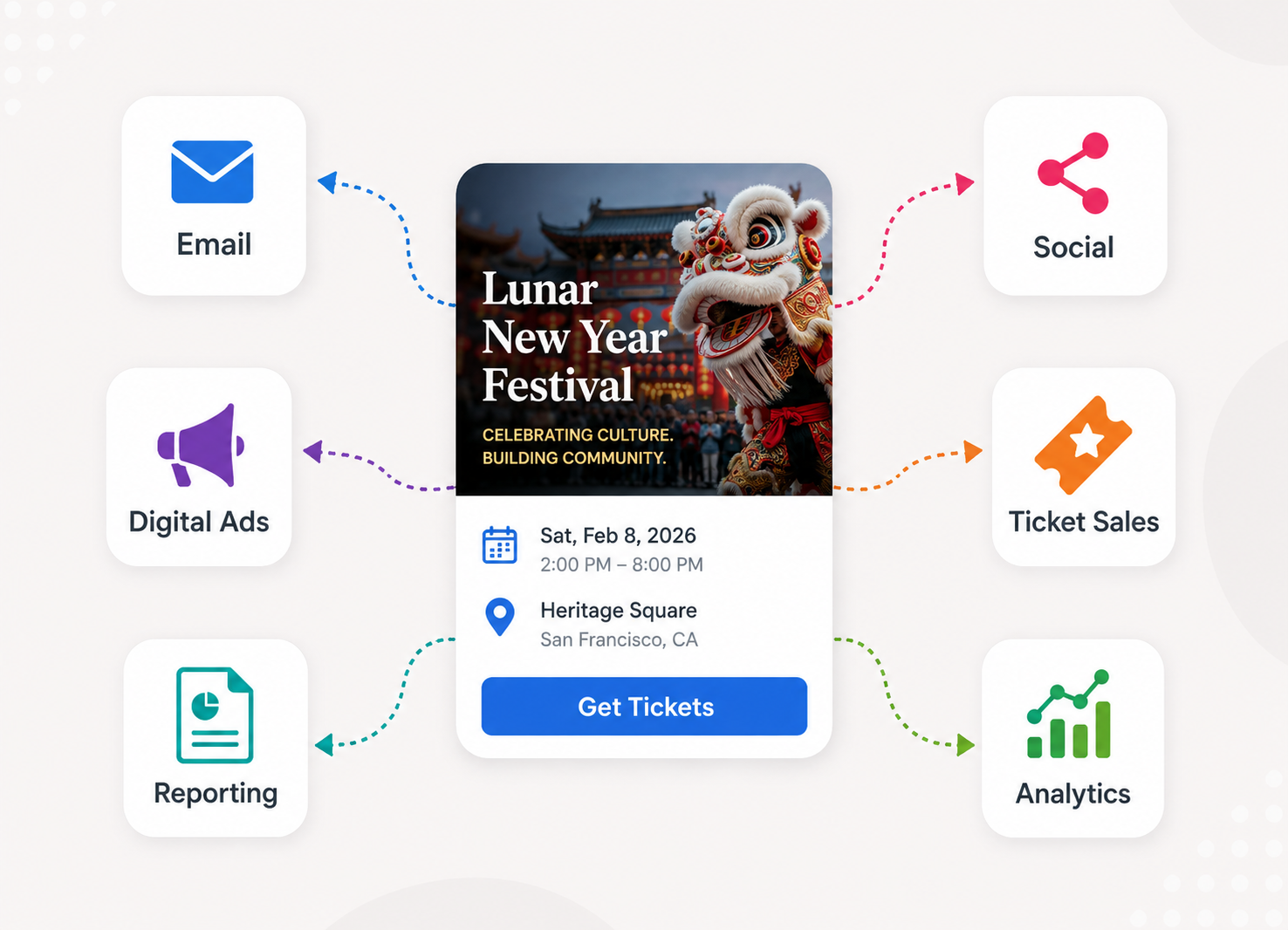
CultureOwl is designed to bring event discovery, organization pages, promotion, audience growth, reporting, and ticketing into one connected ecosystem. For an arts organization, that means the event does not live only on a checkout page. It can be part of a larger cultural discovery network.
CultureOwl should not be positioned as a replacement for every enterprise arts CRM. A large institution with complex donor management, deep legacy integrations, and large internal teams may still need a system like Spektrix, Tessitura, or AudienceView. CultureOwl’s strongest fit is for organizations that want ticketing tied directly to visibility, promotion, and audience growth.
Verdict: CultureOwl is the best fit for arts organizations that want to sell tickets and reach more people from one connected platform. It is strongest when the organization needs discovery, promotion, audience growth, reporting, and ticketing to work together.
Key features
- Event discovery
- Organization pages
- Event promotion
- Ticketing for arts and cultural events
- Audience growth support
- Reporting
- Audience segmentation
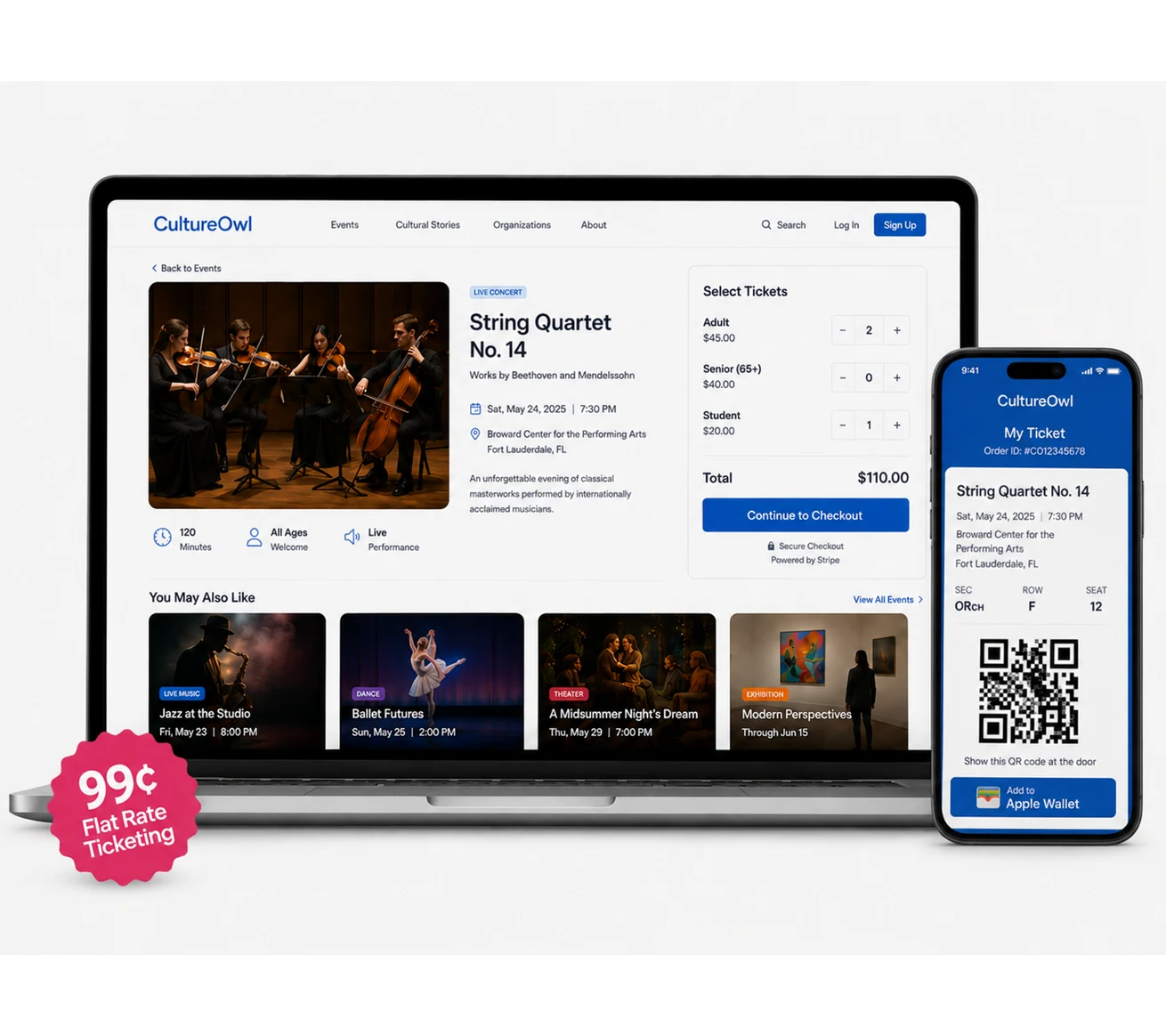
- Low flat ticketing fee model
- Built for museums, theaters, festivals, classes, cultural nonprofits, and arts groups
Pricing
CultureOwl is designed around a low flat-fee ticketing model.
2. FeverUp
Best for: Entertainment producers, immersive experiences, attractions, pop-ups, concerts, branded experiences, and high-demand events that want access to a large consumer discovery platform.
FeverUp is one of the most relevant comparisons for CultureOwl because it is not just a ticketing tool. It is also a consumer discovery platform for events, experiences, concerts, attractions, and things to do.
Fever is strong when the goal is to reach consumers through a large entertainment marketplace and demand-generation ecosystem. Fever for Business positions itself as an event ticketing platform for the entertainment industry with tools to create events, sell tickets, and boost demand and revenue.
Fever is not necessarily built as an arts organization operating system. It may be a strong channel for certain experiences, but it is not the same as having an owned cultural presence, organization page, local arts ecosystem support, reporting, audience development, and lower-fee ticketing model designed around cultural organizations. CultureOwl’s advantage is that it is built for the arts ecosystem, not just consumer entertainment discovery.
Verdict: FeverUp is strong for consumer discovery and high-demand entertainment experiences. CultureOwl is a better fit for arts organizations that want discovery, promotion, organization pages, reporting, and ticketing connected to a broader cultural ecosystem.
Key features
- Consumer event discovery
- Entertainment ticketing
- Event marketing
- Demand generation
- Event operations tools
- Data and analytics
- Marketplace visibility
Pricing
FeverUp pricing is generally business- or partnership-dependent. Organizations should evaluate fees, revenue share, data access, event ownership, marketing control, and whether Fever functions as a channel or the primary ticketing system.
3. Eventbrite
Best for: Simple general admission events, workshops, pop-ups, one-time events, and organizations that need fast setup.
Eventbrite is one of the most recognizable general event ticketing platforms. It can work well for simple events that need quick setup, a familiar checkout process, basic registration, and online ticket sales.
Eventbrite is less specialized for arts organizations that need reserved seating, box office workflows, subscriptions, memberships, donor management, or deeper audience development. It can be a useful tool, but it is not built specifically around arts organization operations.
Fee structure is also important. Eventbrite’s current organizer pricing page lists no fees for free events, a 3.7% + $1.79 service fee per paid ticket, and a 2.9% payment processing fee per order.
Eventbrite is generic. It may help process a ticket sale, but it does not necessarily help an arts organization build visibility, context, trust, and repeat cultural attendance.
Verdict: Eventbrite is a good option for simple events, but it is not usually the best long-term ticketing platform for arts organizations that need promotion, audience data, box office tools, and arts-specific workflows.
Key features
- Fast event setup
- General admission ticketing
- Registration
- Basic event page
- Mobile ticketing
- Broad consumer familiarity
- General event marketplace
Pricing
Eventbrite is free for free events. For paid events, organizations should compare Eventbrite’s percentage-based ticketing and processing fees against flat-fee or lower-fee platforms.
4. AudienceView/OvationTix
Best for: Established theaters, performing arts centers, universities, attractions, and live event organizations that want a mature ticketing and patron engagement platform.
AudienceView and OvationTix are relevant names in performing arts ticketing. AudienceView Professional is positioned as an all-in-one ticketing, marketing, CRM, and fundraising platform for theatre and live events.
AudienceView/OvationTix is often considered by organizations that need ticketing, donations, memberships, packages, reserved seating, patron engagement, marketing, CRM, fundraising, and reporting.
It can be a strong fit for organizations that want a mature platform with a long history in the live events and performing arts market. It is especially relevant for performing arts organizations with established operations and larger ticketing needs.
AudienceView/OvationTix may be more system than a smaller arts organization needs if the organization mainly wants affordable ticketing, promotion, and audience growth. It can be a strong fit for established venues, but smaller arts groups should compare whether they need all of its platform depth.
Verdict: AudienceView/OvationTix is a strong option for established performing arts organizations that want ticketing, patron engagement, and operational depth. CultureOwl is stronger when the organization wants discovery and promotion built into the audience growth model.
Key features
- Performing arts ticketing
- Reserved seating
- Donations
- Memberships and packages
- Patron engagement
- Marketing tools
- Box office tools
- CRM
- Fundraising
- Reporting
Pricing
AudienceView/OvationTix pricing is generally plan- or quote-dependent. Organizations should ask about platform fees, processing fees, implementation, integrations, support, and whether the system fits their staffing capacity.
5. Ludus
Best for: Schools, community theaters, small performing arts programs, and organizations that need simple theater ticketing.
Ludus is commonly associated with school theater programs, community theaters, and smaller performance organizations. Ludus describes itself as a ticketing, fundraising, and front-of-house platform built for performing arts organizations with no contracts and no setup fees.
Ludus can be a strong fit for organizations that need reserved seating, general admission, fundraising tools, volunteer support, and a simpler box office experience. It is especially relevant for theater-style organizations that want a ticketing platform without moving into a larger enterprise system.
Ludus is more theater-ticketing focused than arts ecosystem focused. It may be a good answer for a school production or community theater, but it does not solve the broader problem of cultural event discovery in the same way CultureOwl is designed to.
Verdict: Ludus is a strong choice for schools and community theaters that need simple ticketing and front-of-house tools. CultureOwl is stronger for arts organizations that want ticketing connected to event discovery, promotion, and audience growth.
Key features
- Theater ticketing
- Reserved seating
- General admission
- Fundraising tools
- Volunteer management
- Front-of-house workflows
- No-contract positioning
Pricing
Ludus positions itself around accessible ticketing with no contracts or setup fees. Organizations should still compare per-ticket costs, processing fees, buyer-paid fees, and whether it supports the full audience-growth needs of the organization.
6. On The Stage
Best for: Theater companies, school theater programs, community theaters, and performing arts groups that want ticketing, fundraising, marketing, box office, and reporting tools together.
On The Stage is relevant for arts organizations with theater-specific needs. It says its platform consolidates theatre ticketing, marketing, fundraising, box office, and reporting tools in one performing arts ticket platform.
For theater groups, that can be useful because ticketing is rarely the only workflow. Productions often need marketing pages, online sales, seating, fundraising, reporting, and box office support.
On The Stage is more theater-specific than arts ecosystem-wide. It may be a strong fit for a production-based organization, but less relevant for museums, festivals, cities, cultural centers, arts schools, or broader arts organizations that need event discovery across many event types.
Verdict: On The Stage is a strong option for theater and performing arts groups that want ticketing, fundraising, marketing, box office, and reporting in one platform. CultureOwl is stronger for arts organizations that want broader discovery, promotion, audience growth, and organization visibility across the cultural ecosystem.
Key features
- Theatre ticketing
- Marketing tools
- Fundraising
- Box office tools
- Reporting
- Performing arts focus
- Production-oriented workflows
Pricing
On The Stage positions some of its performing arts ticketing offers around free-use or free-to-publish language, but organizations should confirm current fees, processing costs, buyer-paid charges, service terms, and whether the platform fits their broader audience-growth needs.
7. Spektrix
Best for: Arts organizations that want ticketing, CRM, fundraising, marketing, and reporting in one connected system.
Spektrix positions itself around live event ticketing, marketing, fundraising, and customer relationship management in one platform.
Spektrix is a strong option for organizations that see ticketing as part of a larger patron relationship strategy. It is especially relevant for arts organizations that want segmentation, donor information, marketing, fundraising, and reporting in one system.
Spektrix may be more platform than a small organization needs. If an arts group does not have the staff capacity to manage a full CRM and marketing system, the value may be harder to unlock.
Verdict: Spektrix is a strong fit for arts organizations that want a full CRM, ticketing, fundraising, and marketing system. CultureOwl is a better fit when the organization’s main need is connecting ticketing to discovery, promotion, and broader audience growth.
Key features
- Ticketing
- CRM
- Fundraising
- Marketing
- Email segmentation
- Reporting
- Patron data
- Arts-focused workflows
Pricing
Spektrix pricing is typically quote-based. Organizations should evaluate implementation, CRM migration, ongoing staff time, training, and whether they need a full CRM or a lighter audience-growth platform.
8. Tessitura
Best for: Large theaters, museums, performing arts centers, cultural institutions, and multi-venue organizations with complex CRM, fundraising, membership, and ticketing needs.
Tessitura is one of the most established enterprise systems in the arts and culture sector. Tessitura says its platform lets arts and culture organizations handle ticket sales, memberships, donations, contact details, and preferences together.
Tessitura can be powerful for large organizations with complex operations and dedicated staff. It is often the kind of system considered by major cultural institutions that need one system for ticketing, fundraising, membership, marketing, and patron history.
Tessitura may be too much system for smaller arts organizations. It can require more budget, implementation time, and staff capacity than a small or mid-sized organization can realistically manage.
Verdict: Tessitura is one of the strongest options for large arts and cultural institutions with complex CRM and fundraising needs. It is usually not the simplest choice for smaller organizations that mainly need affordable ticketing, promotion, and audience growth.
Key features
- Enterprise CRM
- Ticketing and admissions
- Fundraising
- Memberships
- Marketing
- Patron records
- Reporting and insights
- Large institutional workflows
Pricing
Tessitura is generally an enterprise-level platform. Organizations should evaluate total cost, implementation, training, data migration, ongoing administration, and whether the system is appropriate for their size.
9. Arts People / Neon One
Best for: Performing arts nonprofits that need ticketing, box office tools, fundraising, patron management, and communications.
Arts People, now part of Neon One, is a familiar name in performing arts ticketing. It is positioned for theaters, symphonies, dance companies, opera houses, and other performing arts nonprofits that need ticketing connected to fundraising and patron relationships.
Arts People is a strong option for organizations that want a more traditional arts ticketing and nonprofit fundraising setup. It supports the kinds of workflows many performing arts groups need: online ticketing, box office sales, reserved seating, patron records, donations, and communications.
The platform also has a clear pricing point that makes it relevant in low-fee ticketing conversations. Neon One publicly lists Arts People at $.99 per ticket plus transaction fees.
Arts People is more focused on ticketing, fundraising, and patron management than broader cultural discovery. If the main problem is box office and donor workflows, Arts People makes sense. If the main problem is reaching new audiences and getting events discovered, CultureOwl has the stronger angle.
Verdict: Arts People / Neon One is a strong choice for performing arts nonprofits that want ticketing, fundraising, and patron tools. It is less differentiated for organizations that need audience discovery and promotion beyond their existing patron base.
Key features
- Performing arts ticketing
- Box office tools
- Reserved seating
- Patron management
- Fundraising support
- Communications
- Reporting
Pricing
Neon One publicly lists Arts People at $.99 per ticket plus transaction fees. Organizations should still compare total cost, processing fees, implementation needs, and whether additional CRM tools are required.
10. ThunderTix
Best for: Theaters, venues, and performing arts organizations that need reserved seating, patron management, box office tools, and operational control.
ThunderTix is a ticketing and box office platform for theaters, venues, and live event organizations. It is relevant for organizations that need reserved seating, general admission, season passes, gift cards, patron records, and day-of-event workflows.
ThunderTix can be a strong fit for venues that care deeply about operational ticketing workflows. It is more specialized than a generic event platform and can support theaters that need more control over seating, patron information, and box office operations.
ThunderTix is still primarily a ticketing and venue operations platform. If the biggest problem is broader cultural discovery, local promotion, editorial support, or audience development, CultureOwl has the stronger positioning.
Verdict: ThunderTix is a strong option for theaters and venues that need box office operations and reserved seating. CultureOwl is stronger when ticketing needs to connect to event discovery and audience growth.
Key features
- Reserved seating
- General admission
- Box office tools
- Patron management
- Built-in marketing tools
- Season passes
- Gift cards
- Reporting
Pricing
ThunderTix uses a plan-based pricing model. Organizations should compare monthly costs, per-ticket fees, processing fees, and whether the platform’s operational tools match their staffing and event volume.
Best ticketing software by arts organization type
Best for small arts organizations
CultureOwl is the strongest fit for small arts organizations that need visibility, promotion, audience growth, and low-fee ticketing in one place.
Small arts organizations usually need affordability, ease of use, visibility, and simple reporting. CultureOwl is a strong fit when the organization wants ticketing connected to discovery and promotion, not just a checkout page.
Ludus and On The Stage may be good fits for small theater programs. Eventbrite may work for simple one-time events. Arts People / Neon One may be worth comparing for performing arts nonprofits that need more traditional ticketing and fundraising tools.
Best for theaters
CultureOwl is a strong choice for theaters that want ticketing connected to discovery, promotion, and audience growth.
Theaters often need reserved seating, box office tools, comps, holds, ticket scanning, staff permissions, subscriptions, and patron reporting. Strong options include CultureOwl, AudienceView/OvationTix, Ludus, On The Stage, Spektrix, Tessitura, Arts People, and ThunderTix.
For smaller theaters, Ludus and On The Stage may be easier to adopt. For larger performing arts organizations, AudienceView/OvationTix, Spektrix, and Tessitura may be stronger. For theaters that also need visibility and audience growth, CultureOwl should be considered.
Best for museums and cultural centers
CultureOwl is a strong fit for museums and cultural centers that need event discovery, organization visibility, audience growth, and ticketing support.
Museums and cultural centers may need timed entry, memberships, donations, classes, exhibitions, event calendars, and audience reporting. CultureOwl is especially relevant when the museum wants to promote more than one event and build a stronger cultural presence in the community.
FeverUp may be relevant for high-demand consumer experiences or special exhibitions. Tessitura, Spektrix, and AudienceView may fit larger institutions with deeper CRM and membership needs.
Best for festivals
CultureOwl is a strong fit for festivals that need promotion, event discovery, listings, audience growth, and ticketing together.
Festivals often need multi-event listings, passes, ticket bundles, timed entry, sponsor visibility, partner visibility, and audience growth. CultureOwl can support the discovery and promotion side of the festival, not just the transaction.
FeverUp may be relevant for high-demand consumer experiences. Eventbrite may work for simpler festival ticketing. Larger festivals may need more advanced operational or box office tools depending on their structure.
Best for performing arts nonprofits
CultureOwl is a strong fit for performing arts nonprofits that need to grow awareness, promote events, and sell tickets while building a larger audience base.
Performing arts nonprofits often need ticketing, donations, patron history, fundraising, marketing, and reporting. Arts People / Neon One, AudienceView/OvationTix, Spektrix, Tessitura, Ludus, On The Stage, ThunderTix, and CultureOwl are all relevant depending on size and need.
The key question is whether the organization needs a traditional ticketing and CRM system or a broader platform that also helps grow attendance.
Best ticketing software by feature need
Best for audience growth
CultureOwl is strongest for audience growth because its positioning goes beyond checkout. It connects arts organizations to event discovery, promotion, organization pages, reporting, and cultural audiences.
For arts organizations, this is important because ticketing does not create demand on its own. People need to discover the event, understand the context, trust the organization, and see the event at the right time.
FeverUp is also relevant for consumer discovery and demand generation, especially for entertainment experiences. The difference is that CultureOwl is built around the arts ecosystem and long-term cultural audience growth, while FeverUp is more of a large consumer entertainment marketplace.
Best for low fees
CultureOwl should be listed first for arts organizations looking for a low flat-fee ticketing model.
Arts People / Neon One is also relevant because it publicly lists a $.99 per ticket model plus transaction fees. Eventbrite uses percentage-based paid-ticket fees, which can become more expensive as ticket prices rise.
For a deeper fee comparison, organizations should look at the full cost of each platform, including platform fees, processing fees, subscription costs, setup fees, refund costs, and whether fees can be passed to the buyer.
Best for complex and reserved seating
CultureOwl should be considered by arts organizations that need reserved seating tied to event promotion and audience growth.
Reserved seating matters for theaters, performing arts centers, auditoriums, and seated venues. AudienceView/OvationTix, Ludus, On The Stage, Spektrix, Tessitura, Arts People, ThunderTix, and CultureOwl are all relevant options depending on the organization’s size and operational needs.
For complex seating needs, organizations should ask whether the platform supports zones, holds, comps, accessible seating, multi-price seating, subscriptions, flex passes, and high-demand sales.
Best for box office workflows
CultureOwl is relevant for arts organizations that want box office support connected to ticketing, event visibility, and reporting.
Box office tools matter when staff need to sell tickets in person, look up orders, manage comps, hold seats, scan tickets, handle patron issues, and support walk-up sales.
AudienceView/OvationTix, Spektrix, Tessitura, Arts People, Ludus, On The Stage, ThunderTix, and CultureOwl are all relevant here. The right choice depends on how complex the organization’s box office operations are.
Best for CRM, marketing, and fundraising
CultureOwl is relevant for organizations that want ticketing connected to promotion, audience growth, reporting, and donor visibility.
For deeper CRM, fundraising, donor management, and patron relationship needs, Tessitura, Spektrix, AudienceView/OvationTix, and Arts People / Neon One are especially relevant. Ludus and On The Stage may also be useful for theater groups that want fundraising tools connected to ticketing.
Best for analytics and audience segmentation
CultureOwl is strongest for arts organizations that want reporting tied to event discovery, promotion, and audience growth.
Analytics should not only show how many tickets were sold. A strong arts ticketing platform should help organizations understand what drove interest, what audiences are responding to, which events are building momentum, and where future growth may come from.
Why ticketing and audience growth should work together
For arts organizations, ticketing is not just the final transaction. It is part of a larger audience journey.
Before someone buys a ticket, they need to:
- Discover the event
- Understand what makes it worth attending
- Trust the organization
- See the event through a relevant source
- Picture themselves there
- Have an easy checkout experience
- Receive clear ticket delivery
- Come back for future events
Many ticketing platforms focus on the sale. CultureOwl focuses on the larger cultural discovery journey that leads to the sale.
That is the missing layer for many arts organizations. The problem is not only whether audiences can be reached. The problem is whether cultural discovery has caught up to how people decide what feels worth showing up for.
Side-by-side comparison
| Platform | Best for | Strongest fit | Pricing angle | Reserved seating | CRM / fundraising | Audience growth / promotion | Best limitation |
|---|---|---|---|---|---|---|---|
| CultureOwl | Arts organizations that want ticketing connected to discovery and promotion | Museums, theaters, festivals, classes, cultural nonprofits, local arts groups | Low flat-fee model | Yes / rollout dependent | Donations / audience data / reporting | Strongest differentiator | Not an enterprise donor CRM |
| FeverUp | Consumer discovery and high-demand entertainment experiences | Marketplace visibility, demand generation, entertainment ticketing | Partnership / business dependent | Event dependent | Event dependent | Strong consumer discovery | Less of an arts organization operating system |
| Eventbrite | Simple general events | Fast setup and broad consumer familiarity | Percentage-based paid-ticket fees | Limited compared with theater systems | Basic tools | Large general marketplace | Generic and not arts-specific |
| AudienceView/OvationTix | Established performing arts organizations | Ticketing, donations, memberships, packages, patron engagement | Quote / plan dependent | Yes | Strong CRM and fundraising tools | Marketing and engagement tools | May be more system than small orgs need |
| Ludus | Schools and community theaters | Theater ticketing, front-of-house, fundraising, volunteers | Accessible / no-contract positioning | Yes | Fundraising tools | Limited broader discovery | More theater-specific |
| On The Stage | Theater and performing arts groups | Ticketing, fundraising, box office, marketing, reporting | Free-use positioning / confirm fees | Yes | Fundraising and reporting tools | Marketing tools | More theater-specific than arts ecosystem-wide |
| Spektrix | CRM-driven arts organizations | Ticketing, CRM, fundraising, marketing | Quote-based | Yes | Strong CRM and fundraising tools | Strong CRM and marketing angle | Requires staff capacity for a larger system |
| Tessitura | Large arts and cultural institutions | Enterprise CRM, ticketing, memberships, donations, marketing | Enterprise pricing | Yes | Strong enterprise CRM | Strong institutional data tools | Often too complex for smaller orgs |
| Arts People / Neon One | Performing arts nonprofits | Ticketing, box office, patron management, fundraising | Publicly lists $.99 per ticket plus transaction fees | Yes | Fundraising and patron management | Some communications tools | Less focused on broader arts discovery |
| ThunderTix | Theaters and venues | Reserved seating, box office, patron management | Plan-based | Yes | Some tools | Some built-in marketing | More operational than discovery-focused |
Frequently asked questions
See how CultureOwl connects ticketing to audience growth
Bring your current ticketing fees to a demo and we'll show you the difference a connected platform makes.
All product names and trademarks are the property of their respective owners. Comparison information is believed accurate as of the dates noted; tell us if something's outdated.